“Ecology and evolution of antibiotic resistance in the lungs”

No
Research

Host: Dr Dan Neill

Venue: Sir Kenneth & Lady Noreen Murray Seminar Room, CTIR 284

Abstract  

Rachel is an evolutionary microbiologist interested in antibiotic resistance evolution, microbial interactions, and within-host adaptation. She is a group leader at Queen’s University Belfast and the main focus of her group is understanding the interface between antibiotic resistance and interactions in the microbiome. Her talk will include recent work on the contribution of pathogen strain diversity to antibiotic resistance evolution in the lungs, as well as work on the impact of antibiotic resistance evolution on microbial interactions. Prior to Queen’s, Rachel was a Junior Research Fellow at the University of Oxford (Magdalen College) within the Biology Department.    

School of Life Sciences
No
Yes
MMB Seminar by Dr Rachel Wheatley, Queen’s University Belfast
Staff United Kingdom

“Towards the development of a Confirmatory Diagnostic Test for Parkinson’s Disease using skin swabs, what we have done and what remains”

No
photograph
Research

Hosts: Varsha Singh & Esther Sammler

Venue: MSI Small Lecture Theatre, SLS

Barran Bio Sketch  

Professor Barran holds a Chair of Mass Spectrometry in the Department of Chemistry and is the Director of the Michael Barber Centre for Collaborative Mass Spectrometry and a member of Manchester Institute of Biotechnology, The University of Manchester, UK.  

She is the deputy chair of the Infrastructure and Capital Advisory Group for the Medical Research Council, UK. 

  Her research interests include: Biological mass spectrometry; Instrument and technique development; Protein structure and interactions; Dynamic and Disordered Systems; Parkinson’s disease Diagnostics; HDX-MS; Proteomics; and Molecular modeling. She is a Fellow of the Royal Society of Chemistry and was awarded the Theophilus Redwood Award from the RSC in 2019, Researcher of the Year 2020 from the University of Manchester and the ACS Measurement Science Lectureship 2021. In 2020 she initiated the COVID-19 Mass Spectrometry Coalition and was appointed as Chief Advisor to the UK Government on Mass Spectrometry as part of their pandemic response. Perdita has had the privilege to mentor 35 graduate students through the successful completion of their PhD’s. as well as 16 postdoctoral fellows.  Perdita has authored over 200 publications in peer reviewed journals which have been cited over 4000 times, by people other than her.  

In 2021 Perdita founded the company Sebomix Ltd. to exploit sebum as a diagnostic biofluid with a focus on Parkinson’s Disease.  

  Adventures with Mass Spectrometry and Joy 

  Our research program uses mass spectrometry (MS) to find biomarkers for Parkinson’s disease to enable diagnosis [1-3]. We do this from endogenous compounds excreted with sebum and obtained from skin swabs. In lab, we can determine if an individual has PD with >95% accuracy [3].  Our unique research program has been initiated by Mrs. Joy Milne, a retired nurse from Perth who noticed a change in her husband's body odour 11 years before his clinical diagnosis of Parkinson's disease (PD). Joy noticed the same distinctive odour was associated with other PD sufferers and hence linked it to onset of the disease. 

  We have also used metabolomics from sebum to reveal alterations in the regulation of lipid synthesis and the carnitine cycle as PD progresses [2]. Recently we demonstrated the equivalence of sebum to serum as a diagnostic biofluid [4].  

  Based on Joy's observation, with simple non-invasive sampling of skin from the upper back, we have developed a diagnostic platform that is able to classify PD from sebum samples with >95% accuracy. The focus of our work to date has been to detect and identify the compound(s) that encompass the unique odour of PD. We have now assessed the feasibility and quality of information provided by using sebum as a diagnostic biofluid via multiple mass spectrometry (MS) based analytical methods, and are now positioned to translate these methods, by incorporating clinical data to stratify PD diagnosis from prodromal to overt. 

  This talk will discuss our methodological approach, recent findings and give a perspective on the use of sebum for non-invasive sampling. 

  I will also make reference to some of the other adventures with mass spectrometry in our labs in Manchester. 

  References 

  1. Trivedi et al. (2019), “Discovery of volatile biomarkers of Parkinson’s disease from sebum”, ACS Central Sciences, 5 (4): 599-606 
  2. Sinclair et al. (2021), “Metabolomics of sebum reveals lipid dysregulation in Parkinson’s disease”, Nature Communications, 12, 1592 
  3. Sarkar et al. (2022), “Paperspray ionisation ion mobility mass spectrometry of sebum classifies biomarker classes for the diagnosis of Parkinson’s disease”, JACS AU 2, 9, 2013–2022 
  4. Spick et al. (2022), “An integrated analysis and comparison of serum, saliva and sebum for COVID-19 metabolomics”, Scientific reports, 12, 11867 
  5. Pereira et al. (2022), “Multiomics implicate gut microbiota in altered lipid and energy metabolism in Parkinson’s disease”, npj Parkinson’s disease, 8, 39 


Molecular Cell and Developmental Biology School of Life Sciences
No
Yes
Joint MRC PPU/MMB Seminar by Prof Perdita Barran,
Staff United Kingdom

"Supporting data-driven science at the Wellcome Sanger Institute"

No
Research

Host: Prof. Jason Swedlow

Venue; MSI Small Lecture Theatre, SLS

Overview - The Wellcome Sanger Institute in Cambridge UK is a world-leader in genomics research. My role as Chief Information Officer includes responsibility for our core informatics and data management. This presentation will outline the current setup and work underway at the Sanger, demonstrating how informatics and data management are key to our current and future scientific endeavours. I will give a flavour of some of the ‘big data’ science underway at the Sanger. This includes spatial/multi-omics, artificial intelligence/machine learning and synthetic genomics. I’ll highlight some future directions in better exploiting technology to improve how we do science generally. The ‘Digital Transformation of our Science’ is a vision that sees all our scientists suitably equipped and trained to exploit next-generation AI, digital infrastructure and techniques, to improve all aspects of our science.

Biography - James is the Chief Information Officer at the Wellcome Sanger Institute. His role encompasses research IT, research data, research software and informatics, enterprise applications, IT infrastructure and information governance and security. Before joining the Sanger, James was Chief Information Officer and Director of Research IT at University College London. And before that, various IT-related and programme management roles in BT (the UK’s leading telecommunications provider). James’ PhD is in AI/computer vision and his current key interests centre around ensuring that the Sanger’s Informatics and Digital Solutions play a very active role in helping scientists plan and deliver bold and ambitious science.

Microsoft Teams Need help? 

Join the meeting now 

Meeting ID: 364 314 729 792 


School of Life Sciences
No
Yes
CB Seminar by Dr James McCafferty, CIO of the Wellcome Sanger Centre
Staff United Kingdom

Commonwealth Scholarship (September 2026)

1 year tuition fees, a monthly stipend, allowances package and travel costs
1 year only
Postgraduate
International

Commonwealth Master’s Scholarships are for candidates from low and middle income Commonwealth countries, to undertake full-time taught Master’s study at a UK University. 

To be considered for these scholarships, applicants must:

  • Be a citizen of or have been granted refugee status by an eligible Commonwealth country, or be a British Protected Person.
  • Be permanently resident in an eligible Commonwealth country.
  • Be available to start academic studies in the UK by the start of the UK academic year in September 2026.
  • By September 2026, hold a first degree of at least upper second-class (2:1) honours standard, or a lower second-class degree and a relevant postgraduate qualification (usually a Master’s degree)*. The CSC would not normally fund a second Master’s degree. If applying for a second Master’s degree, applicants must provide justification as to why they wish to undertake this study.
  • Be unable to afford to study in the UK without this scholarship.
  • Have provided all supporting documentation in the required format.

Funded by the UK Department for International Development (DFID), Commonwealth Master’s Scholarships enable talented and motivated individuals to gain the knowledge and skills required for sustainable development, and are aimed at those who could not otherwise afford to study in the UK. These scholarships are offered under six themes: 

  1. Science and technology for development
  2. Strengthening health systems and capacity
  3. Promoting global prosperity
  4. Strengthening global peace, security and governance
  5. Strengthening resilience and response to crises
  6. Access, inclusion and opportunity 

For full terms and conditions – including further details of the scholarship themes, tenure and placement, value of the scholarship, and general conditions – see the Commonwealth general conditions.

Applications for Commonwealth Master’s scholarships for the 2026/27 academic year are now open. The deadline for submitting an application is 17:00 hours BST (16:00 GMT) on 17 October 2025. The scholarships are for study in the UK beginning in September/October 2026.

Applications to the CSC must be made using the CSC’s online application system.

The CSC is unable to accept any applications or documentation not submitted via the online application system.

Applicants are advised to complete and submit applications as early as possible, as the online application system will be very busy in the days leading up to the application deadline.

As well as applying to the CSC, applicants must apply to a nominating agency.

There are two types of nominating agency for Master’s scholarships:

Nominating agencies put forward scholarship candidates to the CSC for consideration. The CSC does not accept direct applications for these scholarships.

Each nominating agency oversees its own selection process and may have additional eligibility criteria. Applicants must check with the nominating agency for their specific advice and rules for applying, and their own eligibility criteria.

Nominating agencies may set their own closing dates for applications.

Agencies will nominate scholarship candidates to the CSC by December 2025.

Applicants can expect to hear the outcome by July 2026. All applicants will be contacted by email, and they should ensure all folders of their email accounts are monitored, including junk mail and spam folders. A scholarship offer may be withdrawn if a scholarship candidate is emailed but does not respond within a specified time.

Full time Spatial Planning with Sustainable Urban Design MSc Anatomy & Forensic Anthropology MSc Forensic Anthropology MSc Human Anatomy MSc Medical Art MSc International Minerals & Energy Law and Policy LLM International Oil and Gas Law and Policy LLM Civil Engineering with AI MSc Industrial Engineering and Management MSc Computer Science MSc Advanced Computer Science with International Business MSc Advanced Computer Science MSc Data Science & Engineering MSc Information Technology Management & International Business MSc Forensic Odontology MFOdont Forensic Dentistry MSc Dental Public Health MDPH Animation & VFX MSc Fine Art MFA Professional Legal Practice PGDip Cross-Border Disputes LLM Environmental Law LLM International Commercial Law LLM Law (General) LLM Corporate & Commercial Law LLM Corporate Sustainability, Human Rights and ESG Law LLM Social Work MSc International Mineral Resources Management MSc International Oil and Gas Management MSc International Energy Management MSc Sustainability: Climate Change and Transitions to Net-Zero Economies MSc Social Research MSc Sustainability MSc Sustainability and Environmental Modelling MSc Sustainability and Renewables MSc Sustainability and Water Security MSc International Energy Law and Policy LLM International Energy Studies: Energy Economics MSc International Energy Studies: Energy Finance MSc Developmental Psychology MSc Psychology (Conversion) MSc Psychological Research Methods MSc Psychology of Language MSc International Business MSc International Finance MFin Business Research Methods MSc International Marketing MSc Business Analytics MSc Islamic Finance MSc Management MSc Professional Accountancy MSc Accounting & Finance MSc International Banking and Finance MSc Finance MSc Advanced Practice MSc Psychology of Mental Health MSc Life Sciences Masters by Research MSc (Res) Biomedical and Molecular Sciences with Business MSc Biomedical and Molecular Sciences with Entrepreneurship MSc Biomedical and Molecular Sciences with Marketing MSc Biomedical and Molecular Sciences with Management MSc Biomedical and Molecular Sciences MSc Orthopaedic Surgery MChOrth Public Health (Palliative Care Research) MPH Public Health MPH Applied Neuroscience MSc Human Clinical Embryology & Assisted Conception MSc Psychological Therapy in Primary Care MSc Biomedical Engineering MSc Forensic Archaeology and Anthropology MSc Medical Imaging MSc Accounting and Finance courses Anatomy and Human Identification courses Architecture and Urban Planning courses Archive and Information Studies courses Art and Design courses Biological Sciences and Biomedical Sciences courses Business, Management, and Marketing courses Computing courses Dentistry courses Economics courses Education courses Energy, Petroleum and Mineral Law and Policy courses Engineering courses English / Creative Writing / Film Studies courses Geography / Environmental Science courses History courses Languages courses Law courses Mathematics courses Medicine courses Nursing and Health Sciences courses Philosophy courses Physics courses Politics and International Relations courses Psychology courses Social Work courses Scholarship and bursary terms and conditions 2026-27

A Growth Class: Fostering Critical Dialogue | Session Two

Yes
Purple Text slide. A Growth Class Fostering Critical Dialogue
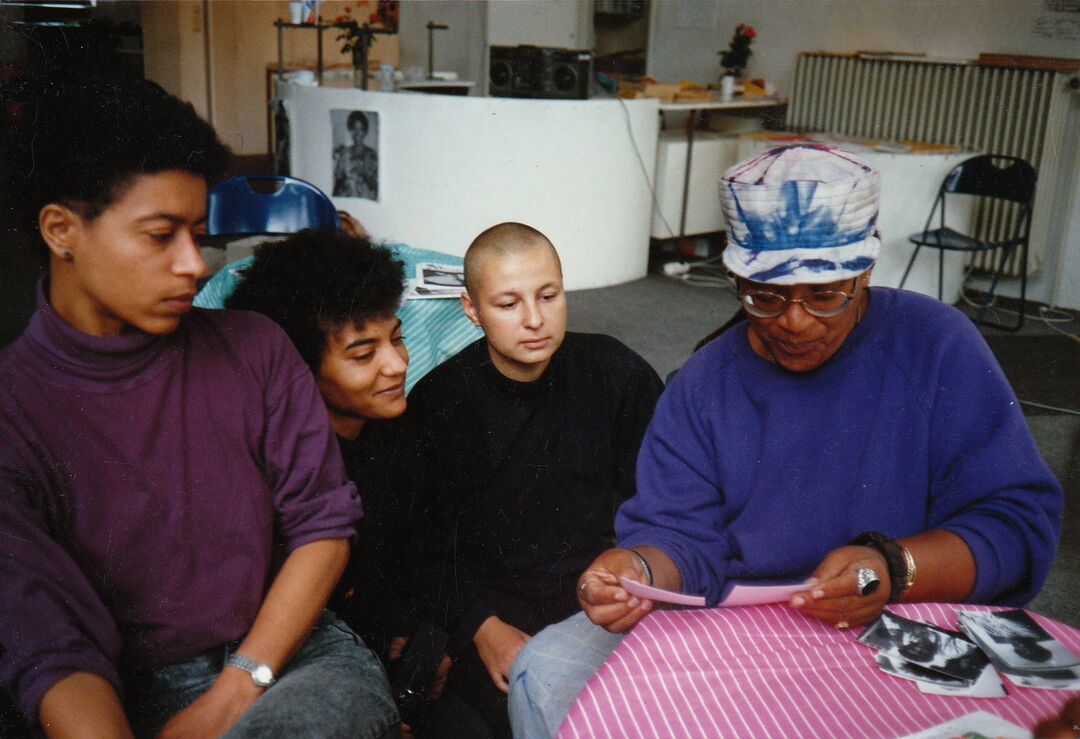
Four black people sit around a table as Audre Lorde looks through printed photographs. She wears a tie-dye hat and glasses. The others look closely at the photos.
Design and Art

Inspired by the ethos of collective and self-organised learning that enthuses Black feminist and queer movements, the two workshops facilitated by writer and art historian Aurella Yussuf will offer artists, writers, and culture workers a supportive environment for peer-to-peer exchange and meaningful, culturally aware feedback on their work, along with a platform for critical discussions on contemporary art. 

The workshops are specifically for Black People and People of Colour who identify as women and/or LGBTQIA+.

A Growth Class is a collaboration between The Ignorant Art School at Cooper Gallery and CCA Glasgow. Sabrina Henry (Head of Programme, CCA Glasgow) and Sophia Yadong Hao (Director, Cooper Gallery) will participate in the supportive conversations at both sessions. 

Booking

Book free place via CCA Glasgow

Participant information

The workshops are specifically for Black People and People of Colour who identify as women and/or LGBTQIA+.
This is an in-person event held at CCA Glasgow.
Food and refreshments will be provided.

This is the second consecutive session in A Growth Class, ideally participants will attend both sessions. See here for more information on session one. If you were not able to make the first session you are still welcome to attend the second session.

Four black people sit around a table as Audre Lorde looks through printed photographs. She wears a tie-dye hat and glasses. The others look closely at the photos.

Biography

Aurella Yussuf is a writer and art historian, whose work focuses on the work of Black artists in Britain and beyond. She is a founding member of interdisciplinary art collective Thick/er Black Lines and the co-creator of the Blk Art Map. Aurella is currently pursuing a PhD at the University of Birmingham.

Access

The event will be held live at CCA Glasgow.
A small access budget is available to attend.
All enquiries please contact: [email protected]

Access Funds

A small access fund is available to support travel and access for BSL interpretation, costs for Childcare, Carers & Support Workers and other needs. The funds are distributed on a first come first served basis. Please be aware we may need to close the fund early if demand is high, so please get in touch at least two weeks' prior to event.

To access funds for travel please email [email protected] and let us know where you are travelling from within Scotland. We will book trains in advance for attendees and ticket collection references will be sent to you by email.

For all enquiries please email: [email protected]

About the exhibition

Outside the Circle, is an exhibition and event programme inspired by and generated from feminist and queer movements since the beginning of the 20th century that foregrounds intersectional feminist and queer strategies of radical emancipation, resistance, survival, and collective action as critical and pedagogical ‘ruptures’ in our lived experience. It is the fourth iteration of ongoing programme, The Ignorant Art School: Five Sit-ins Towards Creative Emancipation.

Visit
18 October 2024 – 1 February 2025
Monday – Saturday, 12–5pm
 

Image
Audre Lorde, Adefra, Kato. Photo by and courtesy Dr. Dagmar Schultz.

Funding support

The Ignorant Art School Sit-in #4 at Cooper Gallery, DJCAD is supported by the National Lottery through Creative Scotland.

logos for Cooper Gallery Duncan of Jordanstone College of Art and Design and Creative Scotland
Cooper Gallery
Cooper Gallery Cooper Gallery The Ignorant Art School | Sit-in 4 | Outside the Circle The Ignorant Art School Sit-in Curriculum #4
No
Yes
Peer-peer support and conversation facilitated by Aurella Yussuf (In-person at CCA Glasgow)

Deubiquitinases (DUBs) modulate type-I interferon & IL-1b pathways

No
Research

Host: Chiara Maniaci

Venue: Small Lecture Theatre, Medical Sciences Institute, SLS

Abstract:

When proteins reach the end of their lifetime, most of them get modified by the attachment of ubiquitin, a small protein of 76 amino acids. This modification has been implicated not just in the elimination of damaged proteins, but also in physiological proteolytic control of processes such as transcription, signal transduction, and cell cycle transitions. Much less is known about enzymes that remove ubiquitin from substrate proteins, referred to as deubiquitylating enzymes (DUBs). Members of the DUB family are already known to contribute to neoplastic transformation and are implicated in immunity and neurodegenerative diseases, making them attractive targets for drug design. 

Our studies revealed that one of these DUBs, USP18, cleaves a ubiquitin analogue, ISG15, and negatively regulates the type-I interferon (IFN-I) response. We show that USP18 shows synthetic lethality with IFN-I leading to cancer cell vulnerability.

Another DUB, ubiquitin C-terminal hydrolase 1 (UCH-L1), interacts with the NACHT domain of NLRP3, a component of the inflammasome complex. Downregulation of UCH-L1 decreases pro-interleukin-1β (IL-1β) levels. UCH-L1 chemical inhibition with small molecules interfered with NLRP3 puncta formation and ASC oligomerization, leading to altered IL-1β cleavage and secretion, particularly in microglia cells, which exhibited elevated UCH-L1 expression as compared to monocytes / macrophages. Altogether, we profiled NLRP3 inflammasome activation dynamics and highlight UCH-L1 as an important modulator of NLRP3-mediated IL-1β production, suggesting that a pharmacological inhibitor of UCH-L1 may decrease inflammation-associated pathologies.

Bio:

Benedikt Kessler graduated from the Swiss Federal Institute of Technology ETH in Zurich, Switzerland in biochemistry in 1992. He received his PhD in immunology at the Ludwig Institute for Cancer Research at the University of Lausanne, Switzerland in 1998. He then joined the laboratory of Hidde L. Ploegh at the Pathology Department at Harvard Medical School in Boston, USA, to study the role of proteolysis in MHC I antigen processing and presentation. After three years, he established a research platform in proteomics at Harvard Medical School. Currently he is Professor of Biochemistry and Life Science Mass Spectrometry at the Target Discovery Institute (TDI), Centre of Medicines Discovery, Department of Medicine, University of Oxford, UK. His laboratory is focused on ubiquitin and protease biology with a specialty in mass spectrometry, proteomics and recently in metabolomics. Expertise in his laboratory is also used to define “molecular signatures” in disease processes and accelerate target discovery in translational research.

Website: https://en.wikipedia.org/wiki/Benedikt_Kessler

Group homepage: https://www.tdi.ox.ac.uk/research/research/tdi-mass-spectrometry-laboratory


School of Life Sciences
No
Yes
MRC Protein Phosphorylation and Ubiquitylation Seminar by Benedikt Kessler Target Discovery Institute, University of Oxford
Staff United Kingdom

A Growth Class: Fostering Critical Dialogue | Session One

Yes
Purple Text slide. A Growth Class Fostering Critical Dialogue
Four black people sit around a table as Audre Lorde looks through printed photographs. She wears a tie-dye hat and glasses. The others look closely at the photos.
Design and Art

Inspired by the ethos of collective and self-organised learning that enthuses Black feminist and queer movements, the two workshops facilitated by writer and art historian Aurella Yussuf will offer artists, writers, and culture workers a supportive environment for peer-to-peer exchange and meaningful, culturally aware feedback on their work, along with a platform for critical discussions on contemporary art.

This two-part workshop on culturally competent critique is designed for artists, writers, and curators of colour. The workshops are specifically for Black People and People of Colour who identify as women and/or LGBTQIA+.

In the first session, participants will explore how race, identity, and context shape the perception of art, discussing the role of cultural references through an in-depth look at Jean-Michel Basquiat’s work. To prepare, please read the provided materials before the workshop.

The second session offers a supportive, peer-led feedback environment where participants will present their own work for critique and engage in providing constructive feedback to others. Please bring a piece (completed or in progress) that you would like feedback on as we practise culturally competent critique together.

A Growth Class is a collaboration between The Ignorant Art School at Cooper Gallery and CCA Glasgow. Sabrina Henry (Head of Programme, CCA Glasgow) and Sophia Yadong Hao (Director, Cooper Gallery) will participate in the supportive conversations at both sessions. 

Booking

Session One
Tuesday 12 November, 6.30-8.30pm (online, Cooper Gallery)
Book a free place via Eventbrite.  

Session Two
Tuesday 26 November, 6.30–8.30pm (in-person, CCA Glasgow)
Book via CCA Glasgow

Participant information

These workshops are specifically for Black People and People of Colour who identify as women and/or LGBTQIA+.
The sessions are consecutive, ideally participants will attend both sessions.

Session One
Online meeting on Zoom. 
Participants will receive a meeting link after registering a free place via Eventbrite. 
Two texts will be shared via Eventbrite and available here, please read the texts ahead of the workshop.
Live-captions available on Zoom.

Session Two
In-person meeting at CCA. Food and refreshments will be provided.

Four black people sit around a table as Audre Lorde looks through printed photographs. She wears a tie-dye hat and glasses. The others look closely at the photos.

Biography

Aurella Yussuf is a writer and art historian, whose work focuses on the work of Black artists in Britain and beyond. She is a founding member of interdisciplinary art collective Thick/er Black Lines and the co-creator of the Blk Art Map. Aurella is currently pursuing a PhD at the University of Birmingham.

Access

The event will be lived captioned on Zoom.
All enquiries please contact: [email protected]

Access Funds

A small access fund is available to support travel and access for BSL interpretation, costs for Childcare, Carers & Support Workers and other needs. The funds are distributed on a first come first served basis. Please be aware we may need to close the fund early if demand is high, so please get in touch at least two weeks' prior to event.

To access funds for travel please email [email protected] and let us know where you are travelling from within Scotland. We will book trains in advance for attendees and ticket collection references will be sent to you by email.

For all enquiries please email: [email protected]

About the exhibition

Outside the Circle, is an exhibition and event programme inspired by and generated from feminist and queer movements since the beginning of the 20th century that foregrounds intersectional feminist and queer strategies of radical emancipation, resistance, survival, and collective action as critical and pedagogical ‘ruptures’ in our lived experience. It is the fourth iteration of ongoing programme, The Ignorant Art School: Five Sit-ins Towards Creative Emancipation.

Visit
18 October 2024 – 1 February 2025
Monday – Saturday, 12–5pm
 

Image
Audre Lorde, Adefra, Kato. Photo by and courtesy Dr. Dagmar Schultz.
 

Funding support

The Ignorant Art School Sit-in #4 at Cooper Gallery, DJCAD is supported by the National Lottery through Creative Scotland.

logos for Cooper Gallery Duncan of Jordanstone College of Art and Design and Creative Scotland
Cooper Gallery
Cooper Gallery Cooper Gallery The Ignorant Art School | Sit-in 4 | Outside the Circle The Ignorant Art School Sit-in Curriculum #4
No
Yes
Peer-peer support and conversation facilitated by Aurella Yussuf (Online)
Subscribe to