

Nell Baxter and Dundee’s Celtic Revival
No

Design for embroidered tea cosy by Nell Baxter

Dundee-born artist and designer Nell Baxter (later known as Helen Kippen) played a key part in an extraordinary cultural movement at the end of the 19th century known as the Celtic Revival, which sought to reconnect to Scotland’s ancient past through art, literature and music. Dundee played a vital role in this movement, not least as the meeting place of its two central figures, botanist and polymath Patrick Geddes and painter John Duncan. Baxter joined them to work on various projects in Edinburgh before returning to Dundee to become part of a growing decorative arts community in the city.
This exhibition marks the 150th anniversary of Baxter’s birth, placing her in the wider context of Dundee’s role in the Celtic Revival. It showcases never-before-seen designs by her along with work by her Dundee contemporaries including John Duncan, Stewart Carmichael and George Dutch Davidson. It also features contemporary artworks inspired by the Celtic Revival and embroideries made by the Dundee Stitch & Textile Group based on Nell's designs.
Exhibition open 9 November 2024 - 8 February 2025 (closed for Christmas 21 Dec – 5 Jan).
Opening hours: Mon-Fri 9.30am-7pm, Sat 11am-4pm. Please note that earlier closing hours may apply on weekdays during the winter vacation. We advise arriving no later than 5pm.
Special Event - On Tuesday 10 December at 5.30pm, Curator Matthew Jarron will give an illustrated talk about Rediscovering Nell Baxter and Dundee's Celtic Revival.
Find out more about University of Dundee Museums
Free
Matthew Jarron
Curator
University of Dundee Museums
Art and Design courses
Book here
No
Yes
An exhibition marking the 150th anniversary of the birth of Dundee artist and designer Nell Baxter, exploring her role in the Celtic Revival
Staff
Students
Persistence in Solar Physics
No
Research
Persistence, or long memory, is of longstanding interest in solar physics, having first been identified in time series of sunspot numbers in the seminal paper by Mandelbrot and Wallis (1969): “Some long‐run properties of geophysical records”. They used a method called Rescaled Range Analysis (R/S) to determine a Hurst exponent, H=0.93, which is indicative of strong persistence. It has since been suggested that for sunspot numbers, and indeed most times series of solar quantities, R/S is not an appropriate method for estimating persistence due to the non-stationary nature of the time series. Detrended fluctuation analysis (DFA) has been proposed as a more suitable method for estimating persistence, and has since been widely used in the analysis of solar and geo-physical time series. However, DFA is known to introduce uncontrolled bias and is in fact inappropriate for non-stationary processes (Bryce & Sprague, 2012).
Here, we assume an alternative class of long-memory models, more commonly found in statistics and econometrics: fractionally integrated processes. We revisit solar physics time series such as sunspot number and total solar irradiance with more robust estimators, and identify higher persistence than previous studies, as well as persistence over timescales significantly shorter than previously identified.
We also consider persistence in time series of quantities derived from solar physics simulations, demonstrating that these simulations capture the memory structure that is present in the observational input data. Further, we provide an algorithm for the quantitative assessment of simulation burn-in: the time after which a quantity has evolved away from its arbitrary initial condition to a physically more realistic state.
Venue: Fulton G20
Eric Hall
Mathematics
No
Yes
Presented by Dr Karen Meyer from the University of Dundee as part of the Mathematics Seminar Series
Staff
Students
A phase-field blood flow model with RBCs interacting through a 2D Lennard-Jones type of potential
No
Research
Under a thermodynamically consistent phase-field modelling framework for the binary incompressible (quasi-incompressible) fluid, which allows for the different properties (densities, viscosities and heat conductivities) of each fluid component, we will first show how to derive such a model for motions and deformations of vesicles (e.g. red blood cells or RBCs) in a blood flow passing through a narrowed blood vessel.
We will also propose a 2D Lennard-Jones type of interaction potential for vesicle-vesicle and vesicle-vessel wall interactions. Mass conserving and energy law preserving finite element schemes are designed and showed for these models. A few examples including the benchmark RBC deformation under stretching forces, RBC passing through a narrowed vessel wall, cell-vessel wall attraction, cell-cell interactions and cell aggregation, and how RBCs divide in the blood flow at a vessel bifurcation are computed and will be presented in the talk.
Venue: Fulton G20
Eric Hall
Mathematics
No
Yes
Presented by Professor Ping Lin from the University of Dundee as part of the Mathematics Seminar Series
Staff
Students
Approximations for random sums with equally correlated summands
No
Research
Let Y = X1 + … + XN be a sum of a random number of random variables, where the random variable N is independent of the Xj. These random sums arise in the modelling of physical and biological phenomena, as well as in applications in financial risk and hypothesis testing. Classically, the Xj are assumed to be independent, in which case central limit theorems and other distributional approximation results for Y are well known.
However, this assumption of independent Xj may be unrealistic in some applications. We relax this restriction, instead assuming that these random variables come from a generalized multinomial model. In this setting we investigate the effect of the correlation parameter on error bounds in Gaussian, Gamma and Poisson approximations. Proofs make use of Stein's method in conjunction with size-biased and zero-biased couplings.
Venue: Fulton G20
Eric Hall
Mathematics
No
Yes
Presented by Dr Fraser Daly from Heriot-Watt University as part of the Mathematics Seminar Series
Staff
Students
Magnetohydrodynamic processes in the sun’s atmosphere
No
Research
The Sun’s atmosphere is a dynamic and complex structuring of the magnetic field and plasma in its various coupled layers, where magnetohydrodynamic (MHD) processes play a crucial role.
This talk will delve into the fascinating ideas about origin and evolution of cool jet-like flows in the Sun’s atmosphere using MHD theory. Solar cool jet-like flows are high-velocity ejecta that are impulsive and collimated plasma motions along the magnetic field lines in the Sun’s atmosphere.
Small-scale cool jets (T<0.1 MK) and associated plasma dynamics have been detected in multiwavelength observations taken from space and ground-based instruments. Their physics can be understood in depth by performing numerical modelling using the MHD theory. We describe our few extensive MHD models in ideal and non-ideal regimes of plasma that demonstrate the origin and evolution of these cool jets and associated plasma processes.
Our findings are consistent with various observations of cool solar jets. These scientific findings clarify the intricate relationship between plasma flows and complex structuring of the magnetic field leading to the evolution of various triggering processes of these jets. This also provides clues on their significant role in energy and mass transport into the lower solar corona. Specifically, we address the formation of such cool jets and associated plasma dynamics using 2-D and 2.5-D MHD modelling using Alfvén pulses, pressure pulses and vertical velocity pulses. The triggering mechanism (driver), dynamical evolution, kinematics, and energetics of such cool jets-like flows in the solar atmosphere are investigated. The non-adiabatic conditions (e.g., thermal-conduction and radiative-cooling) specifically affect the jet propagation, mass-flux, and kinetic energy density.
Venue: Fulton G20
Eric Hall
Mathematics
No
Yes
Presented by Dr Balveer Singh from the University of Dundee as part of the Mathematics Seminar Series
Staff
Students
Annual 3rd year SLS PhD Poster Event
No
Research
The annual 3rd year SLS PhD Poster event is taking place on 30 October in the atrium of the Wellcome Trust Building. Please come along and give your support to our PhD students and find out what they are researching.
Lunch: 12.30 - 13.30 in Wellcome trust Building Atrium for all attendees.
Poster prize winners will be announced on Thursday 31 October at 10am in LifeSpace.
Thanks to event sponsors Activate Scientific and Greiner. Please visit their stands during the event.
No
Yes
Research postgraduate students present their research findings.
A Resourcing Class: Erotics of the Earthworm
Yes


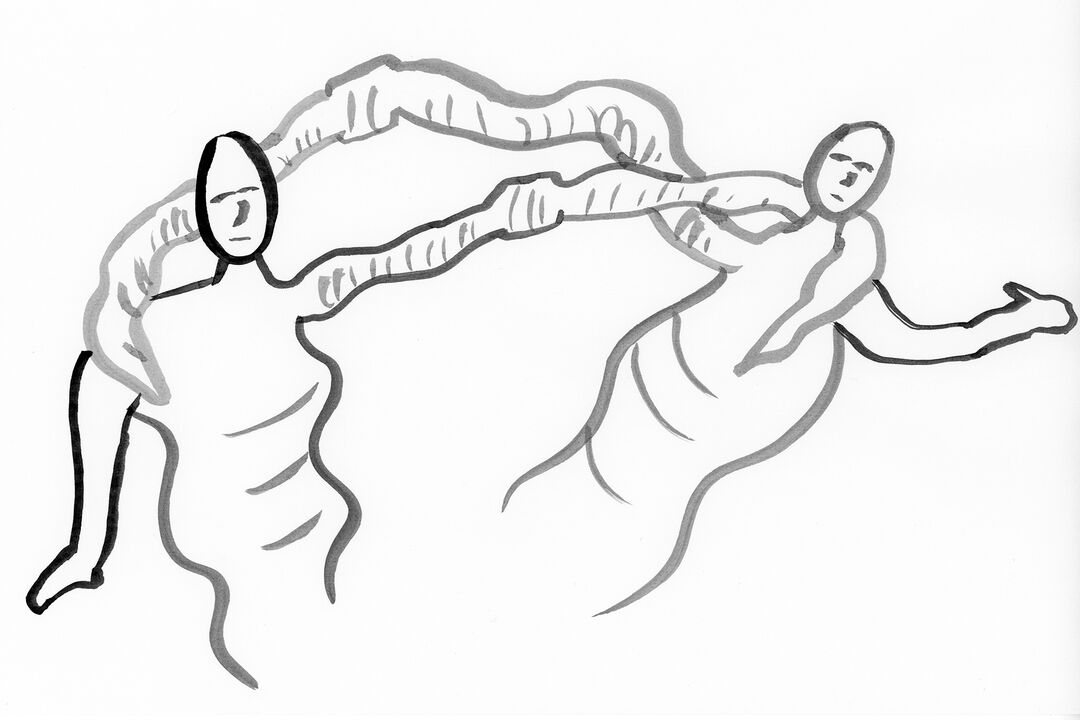
A movement-based session exploring how we nourish our creativity with texts and stories, inspired by the digesting and aerating moves of the earthworm, led by artist and dancer Rabindranath X Bhose.
This movement-based session will explore a practice of reading inspired by Audre Lorde’s essay Uses of the Erotic. It will involve a dance of engaging with books, texts and the exhibition resources, and focusing on what feels stimulating: what literally ‘moves’ you! Our inspiration for movement will be the earthworm: a beautiful creature who transports nutrients around the soil through their digested matter, and aerates it through their tunnels. Together, we will explore how we nourish ourselves and our creative practices through taking in resources, breathing deeply, moving bodies and exposing resonant ideas.
All bodies and ways of engaging and moving are welcome. There will be multiple options for all invitations offered as part of the workshop. Disabled and non-disabled participants are very welcome.
“Any environment, any single life is in a continuous state of change. This is just more obvious when you pay attention to earthworms. Their work may seem unspectacular at first. They don't chirp or sing, they don't gallop or soar, they don't hunt or make tools or write books. But they do something just as powerful: they consume, they transform, they change the earth.”
― Amy Stewart, The Earth Moved: On the Remarkable Achievements of Earthworms
This workshop forms part of the free curriculum of events for The Ignorant Art School Sit-in #4 Outside the Circle.
Sign-up
Free, open to all.
To participate please sign-up for a space via Eventbrite. Link to follow.
Participant Info
All bodies and ways of engaging and moving are welcome. There will be multiple options for all invitations offered as part of the workshop. Disabled and non-disabled participants are very welcome.
Wear clothes you are comfortable moving in, and bring a pen and notebook for any notes you might like to take
Biography
Rabindranath X Bhose is an artist and dancer based in Glasgow and hailing from London, Scotland, France, India and Brussels. His research circles around the figure of the ‘gender fugitive’ and the queer potentials of the bog. Recent commissions include Corpores Infames: Disreputable Bodies at Glasgow International in collaboration with Oren Shoesmith and Belladonna Paloma and DANCE IN THE SACRED DOMAIN: Body of the Bog at Collective, Edinburgh. He is a graduate of School of the Damned DIY Art School and is currently studying for an MFA in Creative Practice at Trinity Laban Conservatoire with Siobhan Davies Studios. He is also a facilitator of Earthworm Sangha meditation community for disabled, chronically ill and neurodiverse people, a Trustee of artist-run space Market Gallery, and a Research Lead for British Art Network 2023-2024 group Artist-Run Initiatives in Britain.
Access
Cooper Gallery is located to the right side of the DJCAD buildings on Perth Road. The entrance is via double doors which face onto a car park.
The gallery is on two floors. Ground floor has ramped access. First floor is accessible by an internal lift and six steps with a handrail. Wheelchair access is via a stairclimber. Please email in advance if you require lift or stairclimber access.
First floor is also accessible via 24 steps. Two flights of 12 steps with handrails are separated by a landing.
Exhibition videos are subtitled and captioned in English. Seating is provided and/or additional seating available, please ask an invigilator.
Access Funds
A small access fund is available to support travel and access for BSL interpretation, costs for Childcare, Carers & Support Workers and other needs. The funds are distributed on a first come first served basis. Please be aware we may need to close the fund early if demand is high, so please get in touch at least two weeks' prior to event.
To access funds for travel please email [email protected] and let us know where you are travelling from within Scotland. We will book trains in advance for attendees and ticket collection references will be sent to you by email.
For all enquiries please email: [email protected]
Toilets
The ground floor has a wheelchair accessible toilet. The toilet is gender neutral.
Interpretation
Large print versions of the exhibition information handout are available, please ask our Guides. If you require alternative formats for material in exhibitions please email or ask our Guides.
About the exhibition
Outside the Circle, is an exhibition and event programme inspired by and generated from feminist and queer movements since the beginning of the 20th century that foregrounds intersectional feminist and queer strategies of radical emancipation, resistance, survival, and collective action as critical and pedagogical ‘ruptures’ in our lived experience. It is the fourth iteration of ongoing programme, The Ignorant Art School: Five Sit-ins Towards Creative Emancipation.
Visit
18 October 2024 – 1 February 2025
Monday – Saturday, 12–5pm
Image credit
Drawing courtesy the artist
Funding support
The Ignorant Art School Sit-in #4 at Cooper Gallery, DJCAD is supported by the National Lottery through Creative Scotland.

Cooper Gallery
Cooper Gallery
Cooper Gallery
The Ignorant Art School | Sit-in 4 | Outside the Circle
The Ignorant Art School Sit-in Curriculum #4
No
Yes
A movement-based session exploring how we nourish our creativity led by artist and dancer Rabindranath X Bhose
Discover Nursing at Dundee Bursary (September 2026)
£2,250 per year of study
Up to 3 years
Undergraduate
The Discover Nursing at Dundee Bursary is available to students who meet the following criteria:
- You must be resident in the UK and classified as an RUK fee paying student by the University of Dundee.
- Your fee status is confirmed in your Offer Letter, and we can only confirm your eligibility for the bursary after you have received your offer to study with us.
- Studying an undergraduate BSc Nursing Degree in the School of Nursing & Health Sciences
Please see the below 'Key Facts' document for further details.
There is no separate application to the University of Dundee for this bursary.
Once you have enrolled at the University of Dundee on your programme, our Student Funding Team will contact you to confirm your award and how we will pay this bursary to you.
Please visit My Applications on e-vision for updates on your bursary application.