Flow Cytometry

Open to staff and students, this facility promotes the use of flow cytometry in a wide variety of applications.
Photograph of 3 laser beams focussed through a lens, with 3 lasers of different colours leaving the lens

Mailbox 6, L6/094

School of Medicine

Ninewells Hospital

Dundee 

DD1 9SY

School of Medicine Research facility

Flow cytometry basics

In the technique of flow cytometry a population of cells or other particles is passed in single file in a focused stream of flowing fluid through a laser illumination source. Information about the cell or particle may be deduced from the scattered laser light in the direction of the laser path (Forward Scatter) and at ninety degrees to the incident laser light (Side Scatter). Additional information about cell phenotype and function may be gathered by an analysis of light emitted at specific frequencies from excited fluorochromes added to the cells. The flow cytometer provides a platform for the rapid collection of data generated in this way, and this information can be collated into readily decipherable graphical representations.

Flow cytometry is commonly used to investigate:

  • Cell immunophenotype using fluorochrome labelled monoclonal antibodies
  • The cell cycle
  • Cell proliferation
  • Cell apoptosis / cell death and viability
  • Functional cell assays such as Calcium Release, Phagocytosis, Reactive Oxygen Species Formation and Cytoplasmic Enzyme Reactions
  • Intracellular protein phosphorylation determination in cell signalling networks
  • Multiple cytokine determination in a single small volume sample
  • Cytoplasmic and nuclear protein determination following permeabilization of the cells
  • Detection of rare cell populations such as stem cells, progenitors and immunospecific reactive cells

Equipment and facilities

Flow Cytometers

The School of Medicine has a multi-user benchtop flow cytometer located within the School within The Immunoassay Biomarker Core Laboratory, L6/094.

The Becton Dickinson LSRFortessa is a benchtop analyser equipped with three lasers, a 488nm (blue), a 633nm (red) and a 405nm (violet), which allows up to thirteen parameter analysis (two scatter detectors and eleven colour specific detectors).

In addition to the software specific to these machines, registered users have access to the analysis package Flowjo on a standalone analysis platform.

Time on the flow cytometer and Flowjo may be booked by registered staff and students using our online booking system.
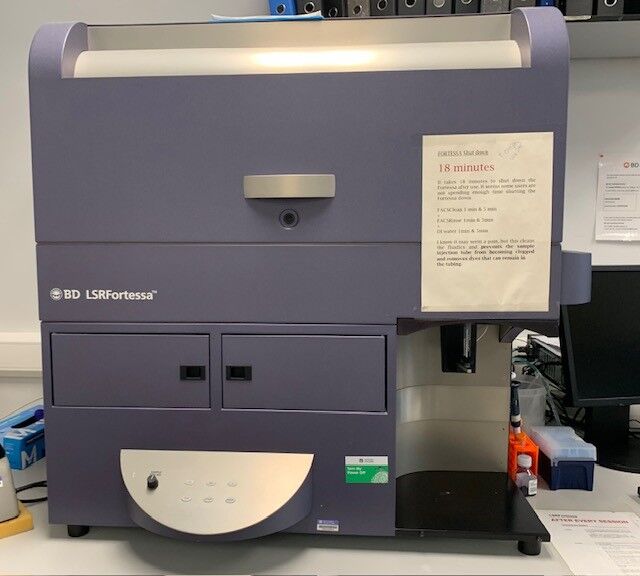
Photograph of a large blue bench top flow cytometer called BD LSRFortessa

Theory and practice

Excellent multimedia presentations on the theory and practice of flow cytometry:

A comprehensive text on the chemistry and use of fluorescent probes:

Resources

Spectral Viewers

Get a quote or discuss projects

If you have any queries or looking for quotes, please contact Cheryl Wood ([email protected]) or Abirami Veluchamy ([email protected]) or Sharon King ([email protected]).

Geolocation
56.464275183551, -3.0392430894688

Dundee Epidemiology and Biostatistics Unit (DEBU)

DEBU, a group of biostatisticians and epidemiologists led by Professor Peter Donnan and includes biostatisticians from across medicine, dentistry, and nursing.

School of Medicine

University of Dundee

Ninewells Hospital

Dundee DD1 9SY

.
.
Dundee Epidemiology and Biostatistics Unit (DEBU)
School of Medicine Research facility

About

DEBU is a group of biostatisticians and epidemiologists led by Professor Peter Donnan and includes biostatisticians from across medicine, dentistry, and nursing.

The group provides collaborative input for design, and analysis to numerous national and regional trials (most recently the Scottish Bell’s Palsy trial, NEJM, 2007) as well as observational studies in, for example, pharmacoepidemiology, and genetic studies (MRC, Wellcome, CSO, and Pharmacuetical industry-funded). These are facilitated by links with the Health Informatics Centre (HIC).

Advice and collaboration

DEBU can provide the following:

  • Collaborative advice on appropriate trial or observational study design
  • Sample size / power estimation
  • Development of statistical analysis plan
  • Statistical Analysis
  • Reporting of results in appropriate plots and tables
  • Collaborative input to final reports and peer-reviewed papers

The group provide an annual generic postgraduate training course in statistics. Members of DEBU also provide a series of biostatistics–based Student Selected Components (SSCs) for undergraduate medical students.

Tayside Clinical Trials Unit (TCTU)

We are a fully registered UKCRC trials unit working with investigators and clinicians to design and deliver high quality clinical research

Tayside Clinical Trials Unit
TASC, R&D Office
Residence Block, Level 3
Ninewells Hospital
Dundee
DD1 9SY

.
.
School of Medicine Research facility

About

Tayside Clinical Trials Unit (TCTU) offers investigators scientific, funding, technical and IT expertise from conception of the trial to analysis and reporting.

We are a fully registered UKCRC trials unit working with investigators and clinicians to design and deliver high quality clinical research. TCTU offers investigators scientific, funding, technical and IT expertise from conception of the trial to analysis and reporting.

The TCTU's role is to provide support and services to investigators, delivering high quality trial design from idea conception through protocol development, data management, analysis and onto publication. In addition, the TCTU aims to improve the success and quality of clinical trials. TCTU supports clinical trials of investigational medicinal products (CTIMPs) and complex intervention studies across a spectrum of disease indication and patient populations.

Advice and expertise

  • Study design: recruitment strategy, sample size
  • Trial Documentation: Protocol review, patient information sheets, case report forms
  • Data Management: capture, storage, transfer, cleaning, independent data monitoring
  • Statistical: design and interim and final analysis
  • Approvals: ethical, regulatory and local governance
  • Contractual management: provision of services, supply of medicinal product, academic collaboration
  • Trial Management and Co-ordination: working with sites, processing amendments, establishing trial committees
  • Funding: identification of potential funding sources and input to funding application
  • Training and Mentoring: overarching and bespoke training and mentoring for clinical researchers, trial managers, coordinators and research nurses

Tayside Clinical Trials Unit for more information 

Tayside Centre for Genomic Analysis

The primary aim of the Centre is to provide genomic analysis services to the University of Dundee encompassing both academic and clinical research themes
TCGA lab with equipment sitting on tables

School of Medicine
Mailbox 6, Level 6
University of Dundee
Ninewells Hospital
DD1 9SY

Enquiries
Tayside Centre for Genomic Analysis Manager
+44 (0)1382 383268
School of Medicine Research facility

About

The primary aim of the Tayside Centre for Genomic Analysis is to provide a state-of-the-art next-generation sequencing (NGS), genotyping services and bioinformatics analysis to the University of Dundee encompassing both academic and clinical research themes. The service is also available to external research and clinical groups, capacity permitting. Funds accumulated through the successful operation of the service are used to support the continued development of the core service unit within the University of Dundee. The Centre endeavours to maintain an inexpensive service while providing state-of-the-art equipment to support the activities of its clients.

Services

The facility provides end-to-end service in all stages: from grant writing, experimental design to data analysis. We offer following standard and bespoke services including:

  • Sample preparation (DNA/RNA extraction) from blood, FFPE, microbial samples, etc., using standard kits or using automated extraction instrument using KingFisher Flex.
  • Quality Control using Agilent TapeStation 4200 and Qubit 3.0 Fluorometer.
  • Next Generation Sequencing Library Preparation using Illumina kits, or any standard kits based on request.
  • Our standard Next Generation sequencing services with pre-made libraries using both Illumina (MiSEQ) and Oxford Nanopore (MinION and GridION) are mRNA, total RNA, small RNA, whole genome, exome, targeted, amplicon (16S/18S/ITS) and metagenomics.
  • Genotyping using Illumina (iScan)
  • Standard quality control for both Illumina, and Oxford Nanopore sequencing data.
  • Bioinformatics data analysis including genome-wide association analysis, genome assembly/alignment, RNA-sequencing, Exome sequencing, Metagenomics, Epigenomics and phenome-genome analysis, etc, using in-house scripts and/ existing or custom-made pipelines in Nextflow.

Equipment use

The TCGA also offers two Applied Biosystems Quantstudio 7 Flex real-time PCR instruments (96-well fast and 384-well blocks and an array card blocks (384-well TLDA) and GridION for use by users within or outside of the University of Dundee. Time on any of the above-mentioned instruments can be arranged using the Labshake, online lab management platform, (University of Dundee staff and students only) or by emailing us.

Find out more information about our services see TCGA website

Get a quote or discuss projects

If you have any queries or looking for quotes, please contact us by email: [email protected]. If you would like to discuss your project requirements, please contact Abirami Veluchamy ([email protected]), Cheryl Wood ([email protected]) or Sharon King ([email protected])

Geolocation
56.464038094065, -3.039012081437

Tayside Bioresource

The Tayside Bioresource is a portfolio of individual studies that have been recruiting participants from Tayside to genetic research since 1997.
A person in PPE moving samples into or out of a fridge

School of Medicine
University of Dundee
Ninewells Hospital
DD1 9SY

School of Medicine Research facility

About

As of January 2012, 40,000 individuals (10% of total Tayside population), have been recruited to these research studies and their DNA has been donated for future research, with the aim of improving the prevention, diagnosis and treatment of a wide range of serious and life-threatening illnesses – including cancer, heart diseases, stroke, diabetes, arthritis, osteoporosis, eye disorders, depression and forms of dementia. Each of these studies involved a great deal of effort and expense to put together, but have shown the utility of having a bioresource linked to the rich clinical datasets which are unique to Tayside.

With the recent funding from the Wellcome Trust we are now exploring the use of “spare blood” in research, and we are seeking population-wide pre-consent for the storage and analysis of blood samples that are taken in routine clinical care. Over a three year period over three quarters of the population of Tayside will have a blood sample taken for one reason or another. This project is known as GoSHARE.

Researchers from around the UK and internationally are studying these DNA samples to determine the role of genes in both disease susceptibility and the effectiveness of treatments.

GoSHARE Spare Blood Project

The Blood Sciences Laboratory and Ninewells Hospital receive over 7,000 samples daily from GPs and Hospital clinics from all over the Tayside region. These samples are routinely discarded after the necessary tests are performed. In Tayside we are seeking pre-consent from the local population for the storage and analysis of any of this blood that is left over after tests have been completed. Whereas before, it took 2 days to analyse and get the results to the GPs, we now have a new sophisticated system in place and each sample is analysed in a few hours with the results being available much sooner than before.

GoTARDIS COPD

Chronic obstructive pulmonary disease (COPD) is the name for a collection of lung diseases including chronic bronchitis, emphysema and chronic obstructive airways disease. The main cause of COPD is smoking and exposure to tobacco smoke, however some cases of COPD are caused by fumes, dust, air pollution and genetic disorders.

Management of COPD is similar, but not identical to that for asthma, and individuals may benefit from different drugs than others. We are interested in finding out why some people with COPD respond well to drugs and others do not.

We have collected DNA from over 2000 individuals with COPD in Tayside (The GoTARDIS study) and we are currently engaged in research to discover genetic markers that are associated with susceptibility to COPD and response to COPD drugs such as steroids, beta-agonists and antibiotics.

GoDARTS

If you were diagnosed with diabetes in the last 2 years and want to take part in the GoDARTS Scotland study please email [email protected] or phone 01382 383208. If you have diabetes and were diagnosed more than 2 years ago you can still sign up to take part in research at www.share-sdrn.org

A high quality resource, initially funded by the Wellcome Trust and supported by Diabetes UK, has been created with successful recruitment of consented patients with type 2 diabetes and matching controls (non diabetics) throughout Tayside.

This resource is already available to researchers worldwide and is helping to define genetic factors related to diabetes including susceptibility, complications and response to treatment.

BREATHE Study (Asthma)

Asthma is the most common chronic condition in childhood, and Scotland has one of the highest prevalences of asthma anywhere in the world. Many individuals do not find that basic asthma medicine are sufficient to control their asthma, and doctors find they have to keep “adding on” more medicines.

We wish to use genetic information to get the right drug to the right patient at the right time, and our recent study shows that this is possible.

In Tayside we initiated the BREATHE study in 2004, where we recruited children from the asthma clinic at Ninewells Hospital and Perth Royal Infirmary, and from many GP practices throughout Tayside. This was then extended to a Scottish wide study known as PAGES, and the BREATHE Study has now extended to recruitment in Brighton. In total over 2300 children have been included in these studies and they have helped discover many genes involved in asthma susceptibility and drug response.

Our funders and supporters

Geolocation
56.464239620223, -3.0389845748811

Tayside Biorepository

A secure bio-repository that collects samples of surplus tissue and other specimens donated by consenting patients

School of Medicine
University of Dundee
Ninewells Hospital
DD1 9SY

.
.
School of Medicine Research facility

About

Tayside Biorepository (TBR) is part of the national Scottish Biorepository network supported by the Chief Scientist Office and works closely with NHS Scotland to facilitate the availability of a  wide variety of human tissue for research from NHS patients undergoing procedures that result in tissue that otherwise would be discarded.

This includes fresh prospective collections, frozen banked (pathological and normal matched including bloods) and fixed tissue held within NHS Pathology diagnostic archive. Tissue type is dependent upon clinical speciality and resource to support projects.

Initial discussions are encouraged to ensure that feasibility and clinical support is in place and this can be done by contacting the manager of TBR.

East of Scotland research ethics committee for Tayside has provided delegated ethical approval to Tayside Biorepository for those requests that require human tissue material that is surplus to diagnostic or surgical requirement.   

If you wish to use any of these materials you are required to fill out an online application form, which will be reviewed by the tissue access committee prior to ethical permission being provided.  If larger cohorts of tissue are required TBR shall work within the Scottish Biorepository network to extend approval across sites to acquire tissue from other health boards.

A large function of the bio-repository involves governance of human tissue work within Tayside and there may be some instances where studies do require  NHS REC approval.  If this is required Tayside Biorepository shall ensure that you are put in contact with the relevant departments within Tayside Medical Science Centre (TASC) in order to start this process successfully.


Geolocation
56.457382070549, -2.9782759904638

Clinical Research Imaging Facility (CRIF)

Our facility has a set of purpose-built research imaging suites within the Clinical Research Centre building at Ninewells Hospital

Clinical Research Centre
Level 5
School of Medicine
University of Dundee
Ninewells Hospital
Dundee DD1 9SY

.
.
School of Medicine Research facility

About

The Clinical Research Imaging Facility (CRIF) is a clinical imaging suite providing state-of-the-art facilities, with a dedicated professional infrastructure to facilitate high quality clinical research, experimental medicine and advanced image guided interventional techniques.

Tayside Medical Science Centre (TASC), a collaboration between the University of Dundee and NHS Tayside, fully integrates CRIF with NHS facilities in terms of governance and technical staff, providing an effective operational framework for safe clinical practice  improving the coordination of existing resources and enhancing collaboration between researchers from all clinical areas and industry partnerships.

The facility is unique in that its design permits the technology to be used not only for diagnostic imaging but also to develop interventional therapies using image-guidance.

CRIF staff and facilities

CRIF hosts an array of advanced technology including a PET-CT scanner, 3T MRI scanner and a 128-slice CT scanner and is staffed with NHS trained personnel, supported by specialist clinicians, radiographers, medical physicists and administrative support.

The area also includes a space for pharmaceutical preparation, patient changing areas and a dedicated image analysis area, capable of supporting up to 10 people.

CRIF is fully equipped for anaesthetic procedures with dedicated anaesthetic and patient recovery areas along with MRI compatible patient monitoring equipment.

CT

The focus of our GE Revolution EVO CT scanner is diagnostic and interventional therapies providing opportunities to participate in ground-breaking interventional research and provide diagnostic imaging including cardiac and coronary CT. The state-of-the-art CT scanner will ensure that CRIF continues to meet the future needs of researchers and the close partnership between the University of Dundee and NHS Tayside has extended the use of these scanners from which all patients will benefit.

MRI

Magnetic Resonance Imaging is a technique which produces non-invasive images using a high magnetic field, without the use of ionizing radiation. Our Siemens 3T Magnetom PrismFit MRI scanner uses a magnetic field twice as strong as many existing scanners, enabling the production of higher resolution images in a shorter time.

This scanner, with whole-body capability, supports a range of advanced clinical and research studies, involving cardiovascular, neurological imaging Including functional MRI (fMRI) based projects in collaboration with psychologists, psychiatrists and neurosurgeons and also provides assistance to the NHS service when required.

PET-CT

Positron emission tomography (PET) with FDG is a non-invasive nuclear medicine imaging procedure that uses a form of radioactive glucose to identify abnormalities within the body.

Our GE Discovery MI Digital PET-CT scanner, which was  the first installation in the UK, is a state-of-the-art PET-CT scanner which offers improvements in lesion detection, image quality and patient comfort

The 128-slice Computerised Tomography (CT) scanner incorporated into the system allows any abnormalities identified to be accurately located in the organs involved.

This technique is particularly useful in the diagnosis of patients suspected of having certain forms of cancer. In addition to cancer, it can be used for research for patients with cardiovascular disease and diseases affecting the brain.

This area has dedicated space for pharmaceutical preparation, patient treatment bays and an image analysis area.

Interventional capabilities

There has been a long history of image guided treatments in Dundee, from laparoscopic surgery and interventional radiology. CRIF has been devised to allow patients to have access to the latest image-guided treatments either under CT, MRI or Fluoroscopic guidance. The aim of image guidance is to provide less invasive alternatives to open surgery, thereby permitting a more rapid recovery and lower operative risk to patients.

This centre is the first in the world to offer such capability and works closely with other divisions within the University including Imaging & Technology’s Institute for Medical Science and Technology (IMSaT) to develop and evaluate new devices and approaches.

Other imaging

Research dedicated facilities in CRIF are complemented by existing NHS facilities in MRI, CT, Nuclear Medicine, ultrasound and X-ray: all of these have the capacity to support research, and many have been involved in a variety of projects.

Contact

For more information about the potential of our CRIF infrastructure for specific or general imaging prospects, please contact: [email protected]

Light Microscopy Facility

The light microscopy facility offers a range of light microscope systems, each one with different capabilities so that a range techniques can be employed
A person in PPE looking through a microscope

School of Medicine
University of Dundee
Ninewells Hospital
DD1 9SY

.
.
Paul Appleton
+44 (0)1382 386027
School of Medicine Research facility

About

Light Microscopy is a widely used tool to visualise and quantify cellular behaviour and structure. We provide dedicated support to research staff and students within who need light microscopy. We are a sister facility of LMF in Life Science and form part of the Centre for Advanced Scientific Technologies (CAST).

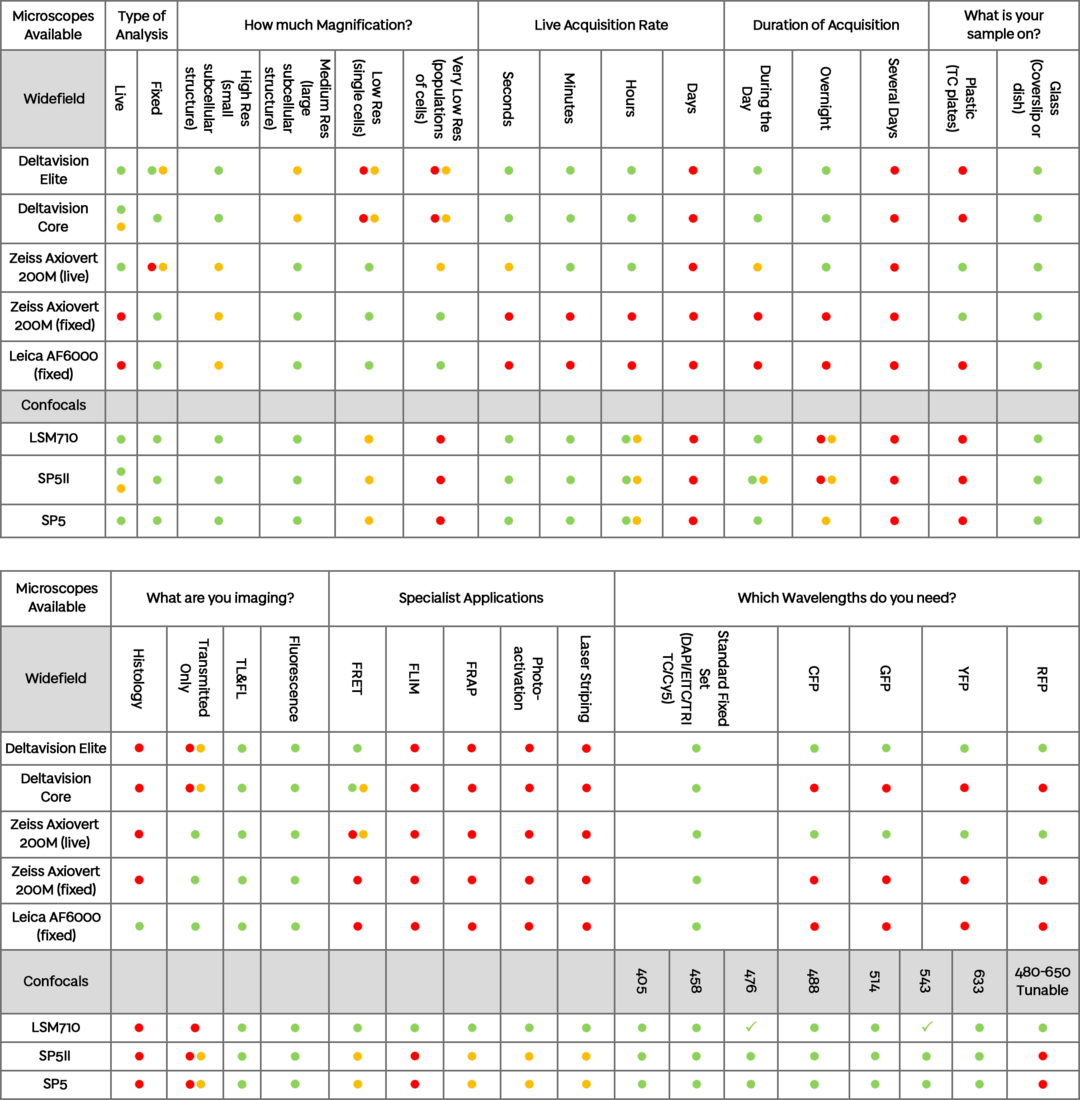
The LMF hosts eight advanced light microscope systems, a Zeiss LSM710 with FLIM detection and the UK’s first installation of an In Tune laser; two Leica SP5s, two DeltaVision widefield deconvolution microscopes, a Zeiss Axiovert 200M live imaging system, an inverted and upright fixed cell microscope. The facility consists of two microscope suites within the MRI with 4 systems located in the main lab block on level 5 and the remaining 4 systems on level 5 of the JWCC.

Our range of microscopy equipment provides solutions for live and fixed cell imaging and covers a range of specific techniques. Equipment in CLS can also be accessed when required.  Each system has  various advantages and disadvantages depending on the specific biological application and sample. The facility can therefore support a wide range of applications from Tissue Imaging by Confocal Microscopy, Protein-Protein interactions by TCSPC FLIM, high resolution imaging of cellular morphology and sub-cellular structure, multi-wavelength and multidimensional imaging of small embryos and long time lapse imaging in XY and Z with multiple fluorophores or fluorescent proteins.

Equipment and facilities

We provide information to help you select the microscope system ideal for the experiment you want to do.

equipment key - contact p.l.appleton@dundee.ac.uk for an accessible version
An equipment chart - contact p.l.appleton@dundee.ac.uk for an accessible version

Please contact [email protected] for an accessible version of our equipment chart.

Biomarker and Drug Analysis Laboratory (BMDA)

Harnessing the power of biomarker and drug analysis for clinical research and drug development.
Biomarker and Drug Analysis Laboratory (BMDA)

View accessibility information for Jacqui Wood Cancer Centre (Ninewells Campus) at AccessAble

Jacqui Wood Centre

James Arrott Drive

School of Medicine

Ninewells Hospital & Medical School

University of Dundee

Dundee DD2 1UB

.
.
School of Medicine Research facility

About

Established in 2011, the Biomarker and Drug Analysis Laboratory (BMDA) provides analytical services for quantitative and qualitative analyses of soluble biomarkers, drug compounds and metabolites with state-of-the-art LC-MS/MS instruments to the researchers at the University of Dundee and to external academics and industrial clients. The laboratory is Good Clinical Laboratory compliant since 2016.

Capabilities 

Pharmacokinetic analysis

  • Quantification of drug compound and metabolites
  • Structural elucidation of drug metabolite 

Biomarker quantification

  • Biomarker discovery- proteomics and metabolomics
  • Biomarker validation 

Mechanistic elucidation

  • Label-free proteomics
  • In vivo SILAC (Stable Isotope Labelling with Amino Acids in Cell Culture) analysis\
Speciality
BMDA has built a portfolio of 3 analytical platforms and assays in the last few years for a wide range of clinical and preclinical applications.
Biomarker platform/assayAnalytical validationPreclinical validationClinical application
 Desmosine
 Neurosteroids_
 Pathway enhanced in vivo SILAC_

Technology and facilities

Mass spectrometry

  • Thermo LTQ-Orbitrap
  • Thermo Quantum Ultra
  • Waters Quattro Premier
  • Waters Micro QQQ

Liquid chromatography

  • Agilent 1200 nano-LC
  • Agilent 1100 LC
  • Thermo Ultimate 3000 LC
  • Waters Acquity UPLC
  • Waters Micro LCs

People

Publications

We are very proud for the successes in our previous research and are grateful for the opportunities to work with our collaborators and clients. The full list of our previous publications can be found on the University research portal.

Geolocation
56.457382070549, -2.9782759904638

Central Technical Services (CTS)

The CTS is a ‘housekeeping’ service that provides core support to research labs throughout the School of Life Sciences and the D’Arcy Thompson Unit (DTU).
bottles of solutions on shelving in lab

View detailed accessibility information for the Sir James Black Centre (Life Sciences) at AccessAble

Central Technical Services 

School of Life Sciences 

Sir James Black and Wellcome Trust Building 

University of Dundee 

Dow Street 

Dundee 

DD1 5EH 

.
.
School of Life Sciences Research facility

About

The Central Technical Service (CTS) is the largest professional service team operating in the School of Life Sciences (SLS), and works closely with other professional service teams within the complex (i.e. Stores, the Lab Management Team and the Safety Services Team). 

The CTS provides a core service for all research groups around the SLS. The CTS can be divided into 5 distinct departments. 

  • Media Prep Facility – provide ‘made to order’ agar plates, liquid media, and buffers for labs around the SLS. 
  • Glass Wash-up Facility – Collection and processing of chemically contaminated glass and plasticware. The clean items are then returned to their lab of origin. We also provide a sterilisation service for equipment and buffers. 
  • Biohazard Waste Facility – Collection, processing and disposal of all solid and liquid biohazard waste created within the SLS.  
  • Sterile Supplies Unit – Pipette tip service and lab coat provision. 
  • Specialised Cat.2 Cleaning Team – Take care of areas where the morning cleaning team are not permitted. In these areas we sweep and clean the floors/sinks, as well as cleaning specialised Cat.2 equipment i.e. Incubators. 

Enquiries

Ryan Webster – Central Technical Service Manager 

+44 (0)1382 384255 

[email protected] 


Karen McGovern – Media Team Lead 

+44 (0)1382 381058 

[email protected] 


Media Orders 

[email protected] 

+44 (0)1382 381058 


CTS Team - requests 

[email protected] 

WTB Kitchen – +44 (0)1382 385683 

JBC Kitchen – +44 (0)1382 386205 

Sterile Supplies – +44 (0)1382 386204 

People

Jenna Anderson - Technical Assistant  

Paige Barclay - Technical Assistant 

Paul Clark - Technical Assistant 

Stevie Dalglish - Technical Assistant 

Alasdair Gibb - Technical Assistant 

Lisa Hyland - Media Technician 

Ross Kenneth - Support Assistant 

Brian Kenny - Technical Assistant 

Arlene Law – Technical Assistant 

Scott MacQueen - Technical Assistant 

Karen McGovern - Media Team Lead 

Vicki Murray - Technical Assistant 

Stiofan Rattray - Support Assistant 

Leanne Reid - Technical Assistant 

Carole Squire - Technical Assistant 

Chris Stephen - Media/Technical Assistant 

Aileen Tinti - - Technical Assistant 

Ryan Webster - CTS Manager 

Jordan Wooding - Technical Assistant 

Subscribe to