Research projects at LRCFS
Our research projects are undertaken by a team of principal investigators, research assistants, postdoctoral researchers, learning technologists, public engagement experts, PhD and MSc researchers.

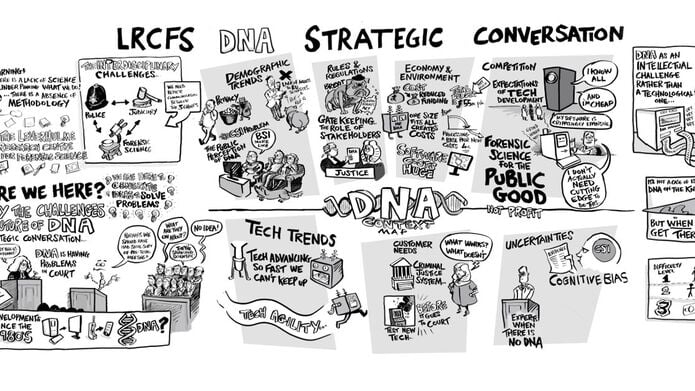
All of our research has practitioner input and the specific project areas are influenced by the outputs of strategic conversations which encompass the views of the whole crime scene to court ecosystem in challenge focused discussions. All projects are aligned to the five LRCFS thematic research pillars (detection, recognition, comparison, interpretation/evaluation and communication) and some of our work spans more than one thematic pillar.
Active projects
-
- Type
- Research project
The Clarus Project
Exploring and Reducing Systematic Bias in Digital Forensic Investigations Across Europe
-
- Type
- Research project
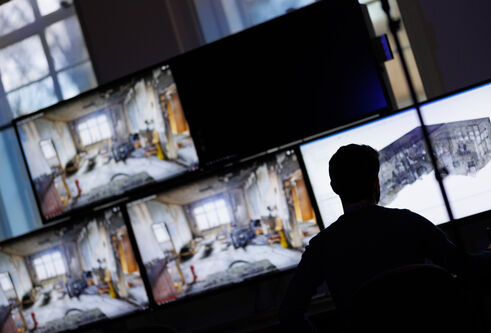
5G Virtual Reality Crime Scene Capture
This project will explore the use of 5G technology to speed up the image capture and reconstruction of indoor and outdoor crime scenes for Virtual Reality.
-
- Type
- Research project
INTERPOL Reports Explorer
The purpose of this R-Shiny application is to make this information more accessible and to allow its user to export the reference lists based on keyword searches.
-
- Type
- Research project
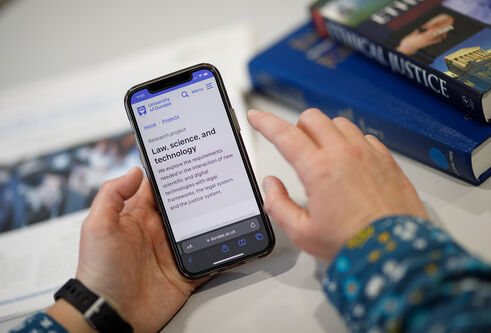
Law, science, and technology
We explore the requirements needed in the interaction of new scientific and digital technologies with legal frameworks, the legal system and the justice system.
-
- Type
- Research project
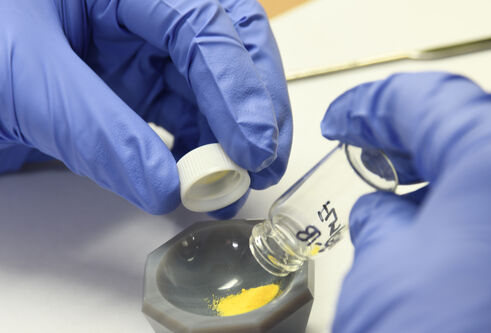
Developing new nanobiosensor detection systems
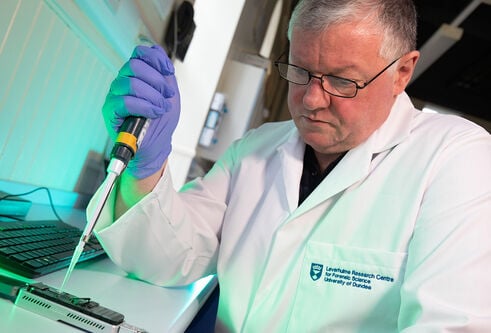
We are creating new ways to detect illicit drugs, explosives and bodily fluids at crime scenes using cutting edge nanobiosensor, DNA aptamers and quantum dot chemistry.
-
- Type
- Research project
Using machine learning algorithms for chemical and feature comparison tasks
We are creating curated ground truth (known source) data sets and applying machine learning algorithms to explore the interpretation of chemical profiles and feature comparison problems.
-
- Type
- Research project
Understanding complex DNA mixtures
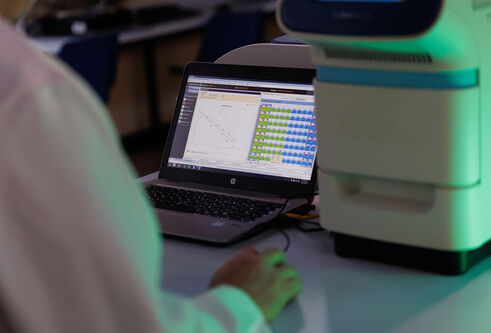
We are exploring the strengths and weaknesses of algorithms and software programs used to interpret complex DNA mixtures (samples that contain DNA from more than one person).
-
- Type
- Research project
Using Extended Reality (XR) for crime scene visualization
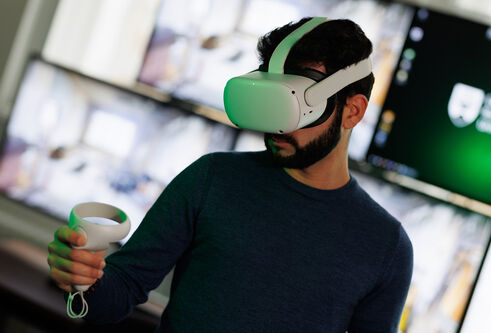
We are developing new avenues of research, collaboration, education and training using Virtual Reality (VR), Augmented Reality (AR) and Mixed Reality (MR) tools.
-
- Type
- Research project
New technologies in DNA Analysis
We are exploring alternative methods of DNA analysis using oxford nanopore and other technologies.
-
- Type
- Research project
Developing ground truth datasets
We generate accessible data sets to aid forensic science research. These include chemical and biological data, physical evidence (such as ballistics and footwear) and biometric samples.
-
- Type
- Research project
Statistics in Forensic Science
We are exploring methods for the development of measurement uncertainty associated with the analysis of a wide range of forensic evidence types and how probability is used to understand the meaning of evidence given different alleged activities.
-
- Type
- Research project
Investigating new psychoactive substances and emerging drug threats
We identify and monitor the emergence of new psychoactive substances on illicit drug markets and investigate the risks of emerging drug threats involving these and more traditional drugs of abuse.
-
- Type
- Research project
Research into training in forensic science
We have developed high quality training and online learning resources for students and forensic science professionals.
-
- Type
- Research project
Generating information about the background abundance of material
We have a citizen science approach to developing activities that generate data on the background abundance of materials for use in forensic science research and interpretation.
-
- Type
- Research project
The transfer and persistence of material
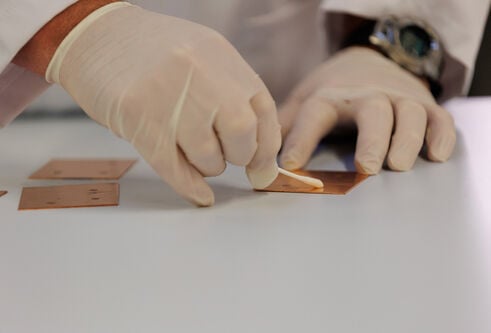
We are creating and testing methods to detect how materials are transferred from places to people, or from people to people and how long materials can last in the environment once they have transferred.

Completed projects
-
- Type
- Public engagement project
Care to Share
Studying the public's perception and trust in forensic science