
PhD opportunity
Limiting soft-water leaching of concrete infrastructure
Unfunded
31 January 2027
- Funding – China Scholarship Council PhD Programme
- Application deadline 31st January 2027
- Standard Entry date - September 2027
- Applicants are expected to have a degree (equivalent of Honours or Masters) in a relevant discipline.
Where concrete is exposed to fast flowing water containing a low quantity of dissolved substances (‘soft’ water), it can undergo leaching. This causes an increase in porosity, which leads to loss of surface and strength, leaving embedded steel reinforcement vulnerable to corrosion.
The problem of softwater leaching is encountered in parts of the world where igneous rock is common, including parts of China, India, South Africa, Scandinavia and the UK. The problem is most commonly encountered in dams, water transfer tunnels and pipes.
Two characteristics of concrete influence the rate at which soft water leaching progresses: the chemistry of the cement matrix, and its pore structure.
The project aims to address the following research questions:
- What is more damaging to concrete – volume or depth of leaching?
- What are optimum cement compositions to resist leaching by soft water, and how are these best achieved using available cementitious materials?
- How does pore size distribution affect rates of soft water leaching, and what is the best approach to proportioning materials to resist leaching?
- Which of the options available for enhancing resistance to leaching the most sustainable?
This research project will develop strategies for designing concrete formulations which address both chemistry and porosity through the use of binary, ternary and possibly quaternary blends to obtain chemical compositions tailored to resist dissolution, and through efficient particle packing to reduce capillary porosity and pore diameters.
It is unlikely that both cement chemistry and particle packing can be simultaneously optimal, and so much of the design strategy will focus on finding the correct balance between these two aspects.
This will be achieved using both laboratory-based experiments using methods such as powder X-ray diffraction, X-ray fluorescence, laser diffraction, BET surface adsorption, thermal analysis, mercury porosimetry and micro-CT scanning. The successful applicant will learn how to conduct these techniques effectively, but also will become highly skilled in the use of various methods (for instance, image analysis, Rietveld refinement, optimisation techniques and multivariate statistical analysis) to extract information from their outputs optimally.
Additionally, the successful applicant will develop skills in conducting aqueous geochemical modelling. This computational technique will be used both to guide the laboratory activities, but also to further elucidate the mechanisms involved in the leaching process.
This research follows on from previous research by the 1st supervisor into the leaching of hardened cement by acids [1, 2, 3].
- Dyer T (2016) Influence of cement type on resistance to organic acids. Magazine of Concrete Research 69(4) 175-200.
- Dyer TD (2017) Influence of cement type on resistance to attack from two carboxylic acids. Cement and Concrete Composites 83 20-35.
- Dyer T (2017) Deterioration of stone and concrete exposed to bird excreta – examination of the role of glyoxylic acid. International Biodeterioration and Biodegradation 125 125-141.
How to apply
Please apply through the link below, you may contact the principal project supervisor to discuss your interest further, see supervisor details below.
Supervisors
Principal supervisor
- Type
- Person
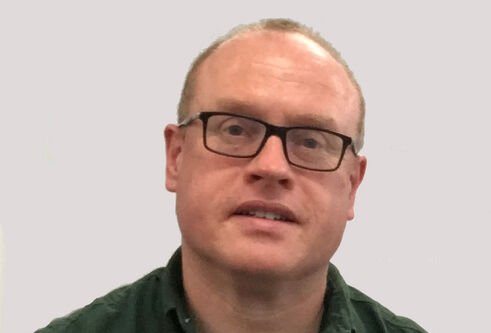
Dr Thomas Dyer
Second supervisor
- Type
- Person
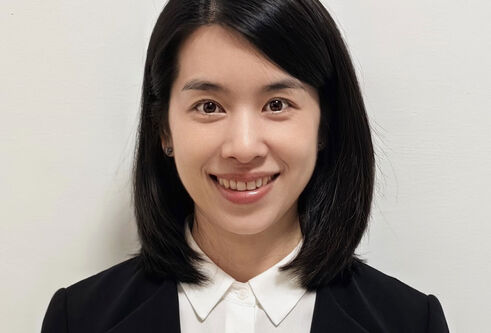
Dr Xuemei Lin
Related PhD programme
- Type
- PhD funding
China Scholarship Council (CSC) Programme
An opportunity for Chinese Students to undertake a PhD programme in any research field in Medicine, Life Sciences, Science and Engineering