Contact
Biography
Scott is a Lecturer in Geotechnical Engineering at the University of Dundee and a Chartered (professionally qualified) Civil Engineer, responsible for the delivery of all Soil Mechanics and Geotechnical Design modules for the BEng (Hons) Civil Engineering Graduate Apprenticeship programme (alongside a range of other subjects). Scott is an engaging Lecturer who aims to bring these subjects to life for his students.
Prior to starting this role in 2020, he worked for University of Dundee as a Research Associate (since 2014) focussing on a wide variety of Geotechnical specialisms, from High Speed Rail Embankments to Subsea Cable Ploughing. Scott has also played a key role in a number of Research Consultancy projects designing and optimising novel subsea anchoring systems to allow deployment of floating offshore renewable energy generation (see the ‘Stories’ section below).
Scott obtained his PhD from the University of Dundee in 2019 using high speed triaxial testing to investigate the factors which influence viscous effects in clays, and is an experienced soil Element Tester. He also has substantial research experience in Geotechnical Centrifuge Modelling using the University of Dundee’s 3m Geotechnical Centrifuge (used to predict the behaviour of geotechnical problems using small scale physical models).
Academic Background
- 2023 – Postgraduate Certificate Academic Performance in Higher Education (PGCAPHE), University of Dundee
- 2019 – PhD in Civil Engineering, University of Dundee (Thesis: Rate Effect Behaviour of Different Clays from High Speed Triaxial Element Testing - Discovery - the University of Dundee Research Portal)
- 2011 – MEng (1st Class Hons) in Civil Engineering, Design and Management, University of Dundee
Professional Memberships
- Chartered Civil Engineer (CEng MICE)
- Fellow of the Geological Society of London (FGS)
- Fellow of the Higher Education Academy (FHEA)
Committees
Scott has held a number of positions in Industry Committees, including:
Institution of Civil Engineers Scottish Geotechnical Group (A Special Interest Group [SIG] committee of ICE Scotland organising and running Knowledge Exchange events for Geotechnical Engineering professionals across Scotland)
- Treasurer – 2018 to 2022
- Honorary Secretary – 2014 to 2018
- Competitions Organiser – 2012 to 2014
Research
Novel Subsea Anchors for Floating Offshore Renewable Energy Generation
As offshore renewable wind generation moves into deeper waters, conventional wind turbine foundations are difficult to use, and floating wind turbines are required. Developing the new anchoring systems that will secure these floating installations to the seabed is a key challenge that needs to be overcome to allowing floating wind to be deployed at scale (helping prevent climate change and bringing down energy bills). Scott has played key roles (including as co-investigator and main researcher) in research consultancy for companies including Heerema Marine Contractors and CorPower Ocean, developing novel types of anchors for this problem and optimising their design to improve efficiency. Several of these anchor designs are now at the stage of full-scale trials offshore, and are moving towards commercial readiness.
Subsea Cable Ploughing
Subsea Cable Ploughing is the process of burying cables (e.g. energy or communication cables) on the seabed to protect them from damage. This is a key topic currently given recent incidents in the news of critical subsea cables being damaged. These cables are buried using large Subsea Cable Ploughs, which are current highly empirical in their design. Scott has been involved in research projects optimising the design of these Ploughs, and developing models that can better predict their required tow force (force from a ship required to pull them) and the final burial depth of the cables (important for ensuring the expected protection is achieved).
Fine Grained Soil Viscosity/Rate Effects
The anchor installation and subsea ploughing described above is a very rapid process, and as the soil is sheared at high speeds its strength can increase. As an Element Tester, Scott has extensive experience in conducting high speed laboratory testing to identify the soil’s strength at these velocities, and conducts research into the factors which control this behaviour.
Research Related Prizes
- Scottish Knowledge Exchange Awards 2025 Finalist (Scottish Knowledge Exchange Awards 2025 finalist - Discovery - the University of Dundee Research Portal)
- International Marine Contractors Association Sustainability Award 2023 (Winners of the International Marine Contractors Association Award for Sustainability best-practice - Discovery - the University of Dundee Research Portal)
-
Canadian Geotechnical Journal Editor’s Choice Award 2021 (Canadian Geotechnical Journal - Editor's Choice Award 2021 - Discovery - the University of Dundee Research Portal)
Teaching
Scott delivers and contributes to a wide range of modules at the University of Dundee covering subjects from Soil Mechanics and Geotechnical Design through to Surveying, 3D Modelling and Mathematics. Scott has also previously taught Structural Design modules at both Level 2 and Level 3 of Civil Engineering Degrees.
As part of the dedicated Graduate Apprenticeship team, he uses a range of interactive teaching techniques to deliver engaging classes and excellent student experience. These classes often use interactive Civil Engineering models to allow students to physically see and interact with the concepts being explained, improving student learning. He also offers Honours Research Projects in areas including Soil Element Testing and the use of Artificial Intelligence Systems in Ground Interpretation. In 2022, Scott was nominated by students for most supportive Honours Project Supervisor in the School of Science and Engineering Learning and Teaching Awards.
Current modules Scott contributes to or delivers include:
- GA10008: Civil Engineering Work-based Learning 1
- GA11006: Maths for Engineers I
- GA12004/CE22007: Surveying Field Course
- GA20008: Civil Engineering Work-based Learning II
- GA22003: Soil Mechanics Concepts
- GA23003: Civil Engineering Group Project II
- GA30008: Civil Engineering Work-based Learning III
- GA32005: Soil Mechanics Applications
- GA40008/CE40001: Honours Research Project
- GA40009: Civil Engineering Work-based Learning IV
- GA41005: Geotechnical Design
Modules I lead on
Stories
- Type
- Press release
Dundee projects and academics recognised in Scottish Knowledge Exchange Awards 2025
Three University of Dundee academics and projects have been named as finalists of the prestigious Scottish Knowledge Exchange Awards 2025
- Type
- Feature
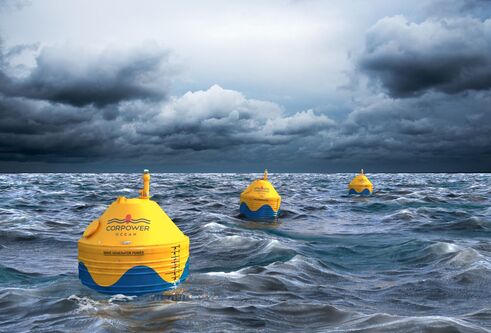
Anchor concept could mark sea change for wave power generation
Engineering experts at the University of Dundee are preparing to make waves in the ocean energy industry with new anchoring technology for the next generation of offshore power generating devices
- Type
- Press release
Offshore construction concept makes waves with major award
A design concept that could transform construction of offshore wind turbines has received a major international award.