

Writing & Decolonising Together | Lorna Burns & Zainab Imran
No


Join a series of letter writing experiments addressing “Other” or “Enemy” to imagine decolonial practice and embrace lessons of collective change, liberatory action, empathy and humanity.
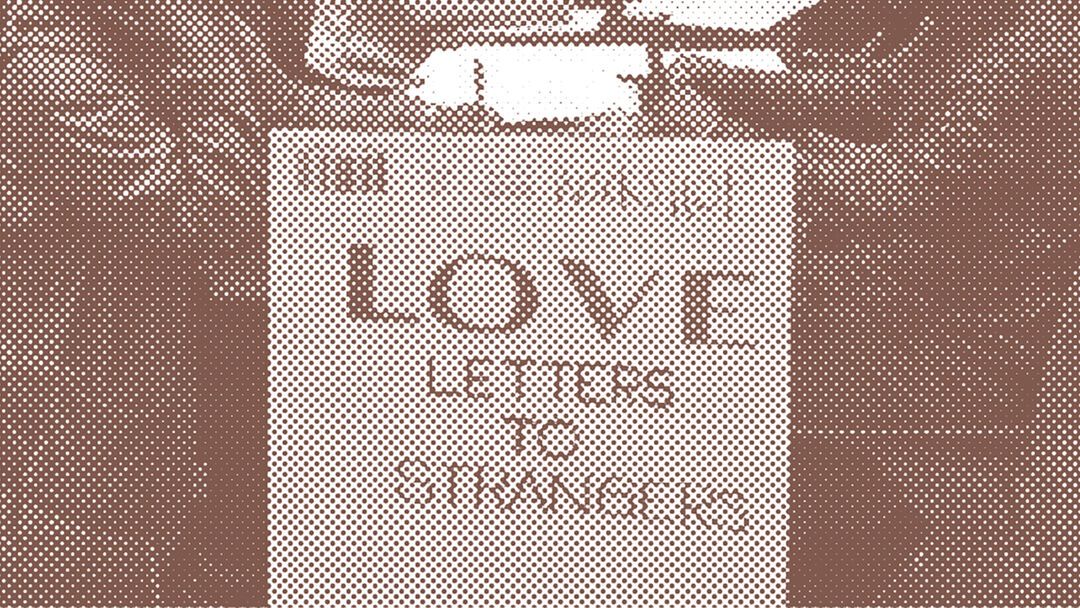
Participants are invited to write anonymous Love Letters (to be shared with each other) to engage in bridge-building and work toward truth and reconciliation with the Other.
The session is grounded in the spirit of anti-racism, feminism and decolonial strategies centred in Ndiritu’s Book Being Together – A Manual For Living.
Lorna Burns (Senior Lecturer in Postcolonial Literatures) & Zainab Imran (poet, facilitator and museum community engagement officer and PhD candidate) at the University of St Andrews will guide participants through a series of invitations to prompt the letter writing. This event is programmed in collaboration with the School of English at University of St Andrews and is open to all, including staff, students and the public.
This event is part of A Season of Peace Building, programmed with Grace Ndiritu for The Ignorant Art School Sit-in Curriculum #5. This series of conversations, workshops and gatherings is designed by Grace Ndiritu, drawing on her book Being Together: A Manual For Living as a template.
Sign-up
Free, open to all.
To participate please sign-up for a space via Eventbrite.
Participant Info
No prior experience or preparation is required.
Participants are invited to contribute their physical letters to Ndiritu's archive.
The exhibition will be open to view ahead of the workshop beginning.
Beyond the session, participants are invited to contribute their physical letters to be added to Ndiritu’s archive.
Equipment
Paper will be provided.
Please bring a pen/pencil for writing with.
Free
Biographies
Lorna Burns is Senior Lecturer in Postcolonial Literatures in the School of English at the University of St Andrews. She completed her MA (hons) and PhD at the University of Glasgow. Her research focusses on the intersection between literature and philosophy within the field of postcolonial studies. She is the author of Postcolonialism After World Literature: Relation, Equality, Dissent (Bloomsbury, 2019), Contemporary Caribbean Writing and Deleuze: Literature Between Postcolonialism and Post-continental Philosophy (Continuum, 2012), and the forthcoming Engagements with Postcolonial Literature and Theory (Routledge).
Zainab Imran (all pronouns) is a poet, facilitator and museum community engagement officer based in Scotland. They are currently completing their Creative Writing PhD (University of St Andrews) on colonial haunting within museum spaces. Zainab has won the Royal Society of Literature Sky Arts Award as Emerging Writer of Colour for Poetry 2022, was shortlisted for the Queen Mary Wasafiri New Writing Prize in 2024, has been published in Gutter, Propel, Wasafiri and was a part of Words a Stage 2.0 with Apples and Snakes and UNDERTOW 2024-25 with the Poetry Translation Centre.
Access
Cooper Gallery is located to the right side of the DJCAD buildings on Perth Road. The entrance is via double doors which face onto a car park.
The gallery is on two floors. First floor has ramped access and disabled toilet.
Second floor is accessible via lift and for wheelchair access via a stairclimber. The event is held on the second floor. The exhibition is on both the first and second floor of the gallery.
Please email in advance if you require lift or stairclimber access.
First floor is also accessible via 24 steps. Two flights of 12 steps with handrails are separated by a landing.
Exhibition videos are subtitled and captioned in English. Seating is provided and/or additional seating available, please ask an invigilator.
For all enquiries please email: [email protected]
Toilets
The ground floor has a wheelchair accessible toilet. The toilet is gender neutral.
Interpretation
Large print versions of the exhibition information handout are available, please ask our Guides. If you require alternative formats for material in exhibitions please email or ask our Guides.
About the exhibition
Compassionate Rebels in Action, is an exhibition and event programme by Grace Ndiritu.
It is the fifth iteration of Cooper Gallery's programme, The Ignorant Art School: Five Sit-ins Towards Creative Emancipation.
Visit
10 October – 13 December 2025
Tuesday – Saturday, 12–5pm
Image credit
Healing Justice, 2019. Workshop documentation, Vancouver Public Library, Vancouver, CA.
Photo by Grace Ndiritu
Funding support
The Ignorant Art School Sit-in #5 at Cooper Gallery, DJCAD is supported by the National Lottery through Creative Scotland.

Cooper Gallery
Cooper Gallery
Cooper Gallery
The Ignorant Art School | Sit-in 5 | Grace Ndiritu
The Ignorant Art School Sit-in Curriculum #5 | A Season of Peace Building
Sign-up for a free place via Eventbrite
No
Yes
Workshop facilitated by Lorna Burns & Zainab Imran in collaboration with School of English, University of St Andrews
Uniform approximation of hyperbolic partial differential control systems
No
Research
In this talk, I will discuss the uniform approximation of hyperbolic partial differential control systems within distributed parameter theory. I will outline the origins of the problem, trace its development, and highlight our recent contributions to this area.
Venue: Fulton G20
Eric Hall
Mathematics
No
Yes
Presented by Prof Jiankang Liu from Shanxi University as part of the Mathematics Seminar Series
Staff
Students
Investigation of Quasi-periodic pulsations in solar flares
No
Research
Solar flares are explosive, energetic events that produce radiative signatures at all layers of the solar atmosphere. Quasi-periodic pulsations (QPPs) are the most commonly observed phenomena in solar flares, exhibiting periodic fluctuations in the observed radiation.
Our research aims to carry out a systematic investigation of quasi-periodic pulsations in M7.3 class solar flare ribbons and study their height-wise distribution using various low and high-temperature UV spectral lines observed by the Interface Region Imaging Spectrograph (IRIS). The time series analysis of GOES soft X-rays and RHESSI hard X-rays revealed multiple conspicuous oscillatory patterns during the impulsive phase of the flare. At the same time, the IRIS UV spectral images showed sawtooth pattern intensity fluctuations in space as the ribbon sweeps the slit with time. Small-scale substructures within the ribbon at various locations are tracked in SJI channels, and the time series analysis showed the oscillatory patterns with characteristic periods. The non-linear and non-stationary properties of QPPs observed along the flare ribbons in various time series were studied thoroughly using the wavelet analysis. Combining data from various observatories facilitated us to study the role of QPPs in flare energy release at various heights in the solar atmosphere and the results confirmed the existence of multi-periodic regimes.
Venue: Fulton G20
Eric Hall
Mathematics
No
Yes
Presented by Dr Sargam Mulay from the University of Glasgow as part of the Mathematics Seminar Series
Staff
Students
Statistics and the law: what’s the verdict?
No
Research
Criminal cases can feature multiple pieces of dependent evidence and multiple possible explanations for this evidence. It can be challenging to disentangle the correlations between pieces of evidence and to understand how to form a logically consistent argument that accounts for this evidence in a way that is probabilistically sound. There have been high profile miscarriages of justice that have resulted from failures in probabilistic reasoning and interpretation.
In this talk I will show how chain event graphs can be used to construct possible storylines for displaying the time evolution of events and evidence in criminal cases. These chain event graphs can both be used to investigate possible arguments when drawing up a case and to make probabilistic assessments of the strength of evidence when prosecuting or defending. I will give two examples – a drugs on banknotes case and the case of the murder of Meredith Kercher. To finish the talk I will discuss the role that statistics and probabilistic reasoning can play in criminal cases and highlight where greater collaboration is needed between statisticians and those in the legal sector.
Venue: Fulton G20
Eric Hall
Mathematics
No
Yes
Presented by Dr Amy Wilson from the University of Edinburgh as part of the Mathematics Seminar Series
Staff
Students
Cointegration Modeling: Concepts, ARDL Methods, and Software Advances
No
Research
Cointegration remains a cornerstone of time-series econometrics which is what led to Engle and Granger receiving the Nobel Prize in economics in 2003.
In this talk, I will begin by revisiting the issue of spurious regression in non-stationary series and outline the intuition behind cointegration. I will then explore various modeling strategies, with particular emphasis on ARDL (Autoregressive Distributed Lag) models and the bounds testing approach.
The second part of the presentation will focus on software, where I will introduce the ARDL package in R, compare its functionality with other implementations, including proprietary platforms, and share some thoughts on future enhancements and directions.
Venue: Fulton G20
Eric Hall
Mathematics
No
Yes
Presented by Dr Kleanthis Natsipoulos from the University of Dundee School of Business as part of the Mathematics Seminar Series
Staff
Students
The strong-field regime of spherical dynamos and its relevance to magnetic field generation in Earth’s core
No
Research
Planetary magnetic fields are produced by dynamo action through turbulent motions of an electrically conducting fluid within the interior of the planet. Numerical experiments of dynamo action relevant to Earth's magnetic field have produced different regime branches identified within bifurcation diagrams [1,2]. Notable are distinct branches in which the resultant magnetic field is either weak or strong (when compared with the fluid flow). Weak-field solutions can be identified by the prominent role of viscosity and/or inertia on the motion whereas the magnetic field has a leading order effect on the flow in strong-field solutions. Bistability between branches can be found within a small window of parameter space, as long theorised [3]
One measure of the success of numerical models of the geodynamo is the ability to replicate the expected balance between forces operating within Earth's core; Coriolis (rotational) and Lorentz (magnetic) forces are predicted to be most important. The value of considering lengthscale dependent force balances [4] and ‘gradient-free’ solenoidal forces has been highlighted [5].
I will review the approach in numerically modelling spherical dynamos and the challenges in doing so. I will discuss the branches and bifurcations of dynamo action previously explored in numerical simulations. Furthermore, in new results, I shall highlight that the expected force balance of Earth's core can be preserved in the strong-field regime as input parameters of numerical simulations are moved towards more realistic values [2].
[1] E. Dormy et al, Fluid Dynamics Res. 50, 011415 (2018)
[2] R. J. Teed & E. Dormy, Geophys. Res. Lett. (in press)
[3] P. Roberts, In: Cupal, I. (ed.), Proc. First Int. Workshop on Dynamo Theory and the Generation of the Earth’s Magnetic Field pp. 7–12. Czech. Geophys. Inst. Rep (1979)
[4] T. Schwaiger et al, Geophys. J. Inter. 219, S101–S114 (2019)
[5] R. J. Teed & E. Dormy, J. Fluid Mech. 964, A26 (2023)
Venue: Fulton G20
Eric Hall
Mathematics
No
Yes
Presented by Dr Robert Teed from the University of Glasgow as part of the Mathematics Seminar Series
Staff
Students
Jamaican Journeys – Closing Event
No

Richard Nattoo, See, Watercolour, pen & ink on paper, 2021
Join us for an evening reception to mark the closing of the Jamaican Journeys exhibition including food, drink, music and a tour of the show.
Venue: Lamb Gallery, Tower Building, University of Dundee, DD1 4HN
Book your place
Yes
Yes
A celebration event to mark the end of the Jamaican Journeys: Identity, Place and Conversations through Art exhibition
Grand Rounds
No

Several students from a range of healthcare disciplines (Medicine, Dentistry and Nursing) will take part in an open conversation exploring how identity confidence and representation shape their journeys in education and training. The participants will blend personal reflection with their vision for what they hope to change in the future of healthcare. The session's tone will be honest but uplifting, celebrating resilience, joy and the importance of inclusivity and allyship within clinical environments.
Attendees will be provoked to consider how each one of us can contribute to a more supportive and nurturing healthcare culture where everyone thrives.
This is a hybrid event. Join via zoom or attend in person, Gannochy Lecture Theatre, Ninewells Hospital
No
Yes
The Grand Round features a student-led Black History Month session on the theme Power and Pride