
Feature
Dundee breaks free: the story of the University’s independence
In 1967, the University of Dundee came into formal existence when it was established by royal charter, building on decades of higher education in the city.
Published on 16 December 2025


1 August 1967 marked a new chapter in the city of Dundee’s history, when it gained its very own university. No longer the “junior partner” of St Andrews, the University of Dundee was now independent, ending more than seventy years of formal association with the Fife institution.
The connection with St Andrews University
The original partnership with St Andrews had been formally recognised in 1897, when the fledgling University College, Dundee was linked to the long-established university across the Tay. If you walk around the campus today, you'll still see reminders of this earlier association - just outside the Tower Building, for example, you'll find a plaque bearing the crest of the University of St Andrews.
The relationship brought about clear academic benefits, helping establish teaching, research, and professional training in the city at a time when Dundee could not yet support a university on its own.
A relationship under strain
However, despite these clear advantages, the two institutions clashed on issues such as responsibility for medical teaching (particularly the pre-clinical subjects), as well as over funding, governance, and where certain academic posts should be based.
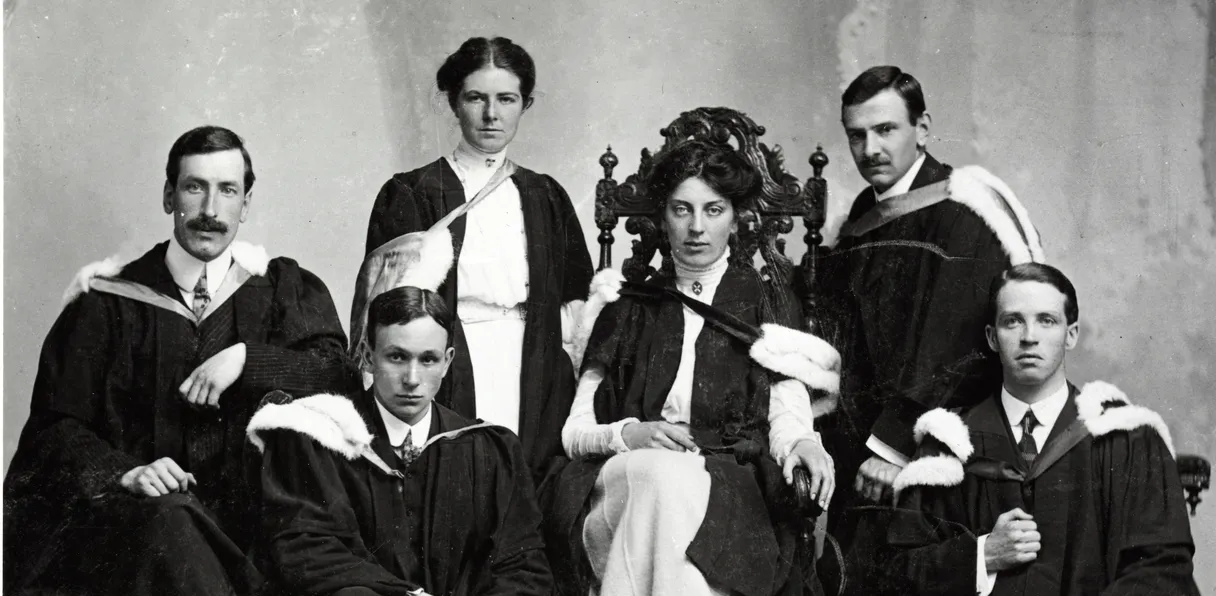
By the 1950s and 60s, these tensions were harder to ignore. Dundee’s academics, civic leaders, and students began to push more firmly for recognition. They wanted a university that reflected Dundee’s own identity, ambition, and modern outlook - not one which was just an extension of another city.
To address the growing unease, the 1952 Royal Commission, chaired by Lord Tedder, set out proposals intended to clarify responsibilities. These included a single university with two colleges, placing the medical school and pre-clinical teaching in Dundee, expanding provision in subjects such as economics and law, and setting out a clearer division of teaching to avoid duplication with St Andrews.
Queen's College, Dundee
The Tedder recommendations paved the way for substantial change. An Act of Parliament, known as the University of St Andrews Act, received Royal Assent in 1953, and Queen’s College, Dundee was created. It included the Medical School and the Dental School.
Over the next decade, there was a massive expansion in buildings, subjects, and student numbers.
One of the most visible signs of this expansion was the construction of the Tower Building, with the foundation stone laid in 1959. It was intended to:
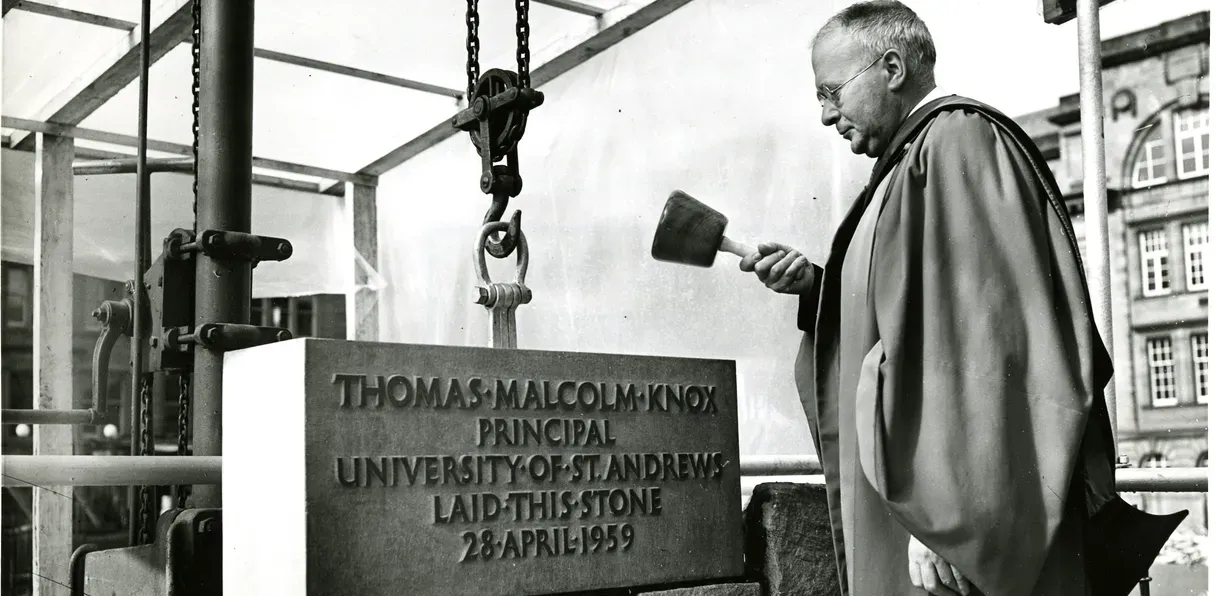
The Tower Building
At this stage, independence was still not inevitable. While many in Dundee supported the idea, the real turning point came with the Robbins Report of 1963, which called for rapid university expansion and the creation of new institutions in Scotland.
Student numbers then rose quickly and the policy of non-duplication with St Andrews was abandoned. In 1964 Principal Sir Malcolm Knox proposed that Queen’s College should become an independent university.
Independence
The people of Dundee have always been determined. Now, backed by local industry, city councillors, and an ever-growing student voice, the push gathered momentum. The case was clear: Dundee had the staff, the research, the facilities, and - most importantly - the vision to go it alone.
In 1967, the government agreed. University College Dundee was re-chartered as The University of Dundee. For the first time, the city had a fully independent university of its own, free to set its own course and craft its own traditions.
To celebrate, hundreds of students processed up the Law in their red academic gowns, making a striking spectacle as they snaked round its summit.
Royal approval
The Queen Mother became the University’s first Chancellor, both raising its profile and acting as a vote of confidence in the new institution. She held the position of Chancellor for ten years and was a frequent visitor to the University, presiding at the graduation ceremony in the Caird Hall.
Her name lives on on campus today, with the Queen Mother Building now housing Computing.