
Feature
From bedpans to breakthroughs: Dundee’s Medical School
Today we have one of the UK's leading medical schools, with research that now shapes medical practice around the world, but the journey to get here was not straightforward
Published on 9 December 2025


Dundee Royal Infirmary c.1873, from University of Dundee Archives, MS 102/5/1 (48)
Early ambitions
It’s one of the best medical schools in the UK today, but did you know that Dundee’s journey into medicine started with a bit of drama, a lot of ambition, and plenty of academic rivalry?
By the time University College Dundee (UCD) opened its doors in 1881, the city had already developed a strong reputation for healthcare. With top-class facilities like the Dundee Royal Infirmary (DRI) and the Royal Lunatic Asylum, medicine felt like a natural next step for this ambitious new college.
But there was one problem: UCD couldn’t actually award degrees. Across the water, St Andrews University, both ancient and prestigious, could. But they were struggling, with student numbers having dwindled to fewer than 200.
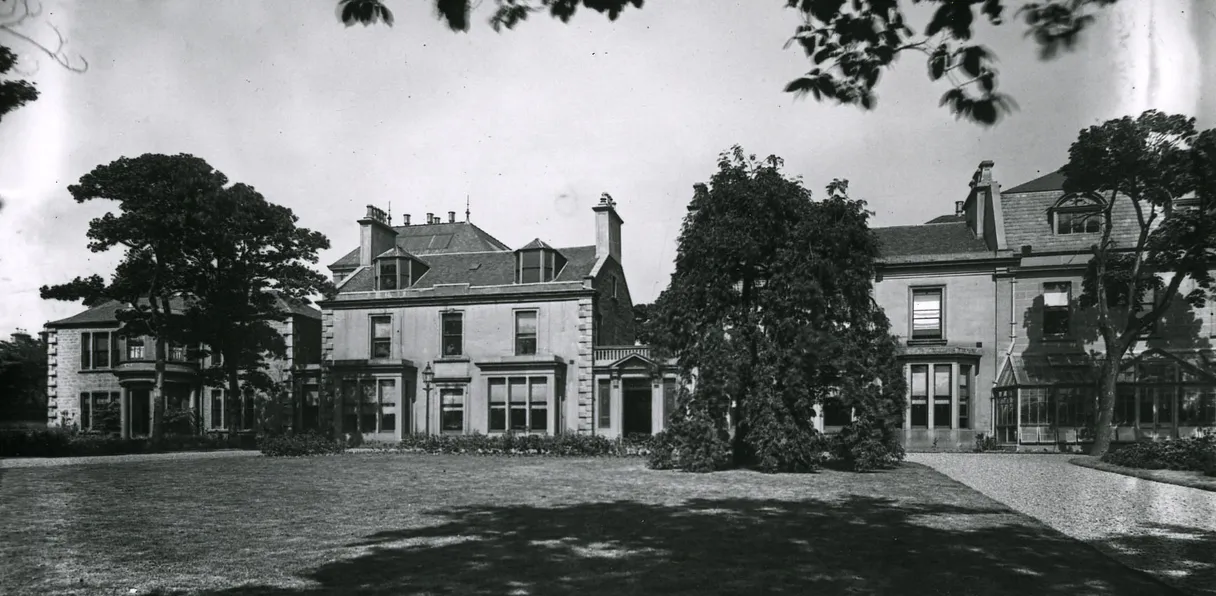
A joint Medical School
In 1887, UCD proposed teaming up with St Andrews to form a joint Medical School. It made perfect sense on paper since Dundee had the hospitals, and St Andrews could award the degrees. Students would be able to complete their early training at St Andrews and then travel to Dundee for clinical experience.
This was made official in 1889 when the government approved a plan for a "fully equipped Conjoint University School of Medicine".
However, not everyone was thrilled. There were disagreements over finances and which institution should teach the pre-clinical subjects. Tensions increased, and in 1894, St Andrews tried to sue to get out of the deal. They lost.
By 1897, University College Dundee became an official college of St Andrews, and the Faculty of Medicine was up and running.
Dundee oversaw the clinical training (mainly at DRI), while the early academic work initially stayed in St Andrews, until Dundee built its own Medical School building in 1902.
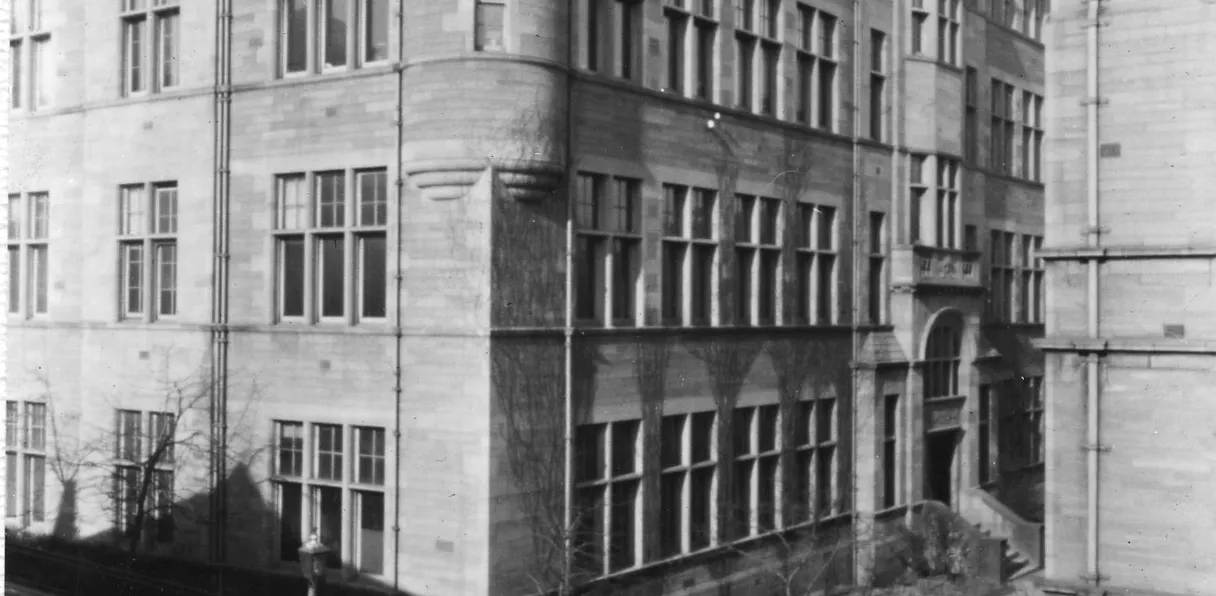
The Old Medical School
The Medical School building was opened in 1904, just in time for a visit from the General Medical Council to assess the new degree.
The examiners declared the school to be "Sufficient", but Dundee would soon prove that verdict far too modest.
By 1909, Dundee was already educating students who would go on to shape medical research and practice, including W.J. Tulloch, later Professor of Bacteriology and Dean of Medicine. He would become a leading expert on tetanus.
Queen's College and the beginnings of the NHS
By the early twentieth century it was clear that Dundee's ambitions had outgrown the joint arrangement.
Student and staff numbers steadily grew. In 1954, UCD became Queen’s College, and gained more autonomy. With the introduction of the NHS, the school expanded again.
New teaching hospitals followed, along with growing opportunities for research.
Foundations were laid in areas that Dundee is still known for today, including diabetes care and early advances in keyhole surgery. Exciting medical breakthroughs were just around the corner.
Independence and the building of Ninewells Hospital
As the swinging ’60s rolled around, something even bigger was coming: independence.
In 1967, Dundee officially became its own university. By then, plans were already in motion to build Ninewells Hospital, the future home of the Medical School. It was clear that Dundee needed a modern hospital that could combine teaching, research, and patient care under one roof.
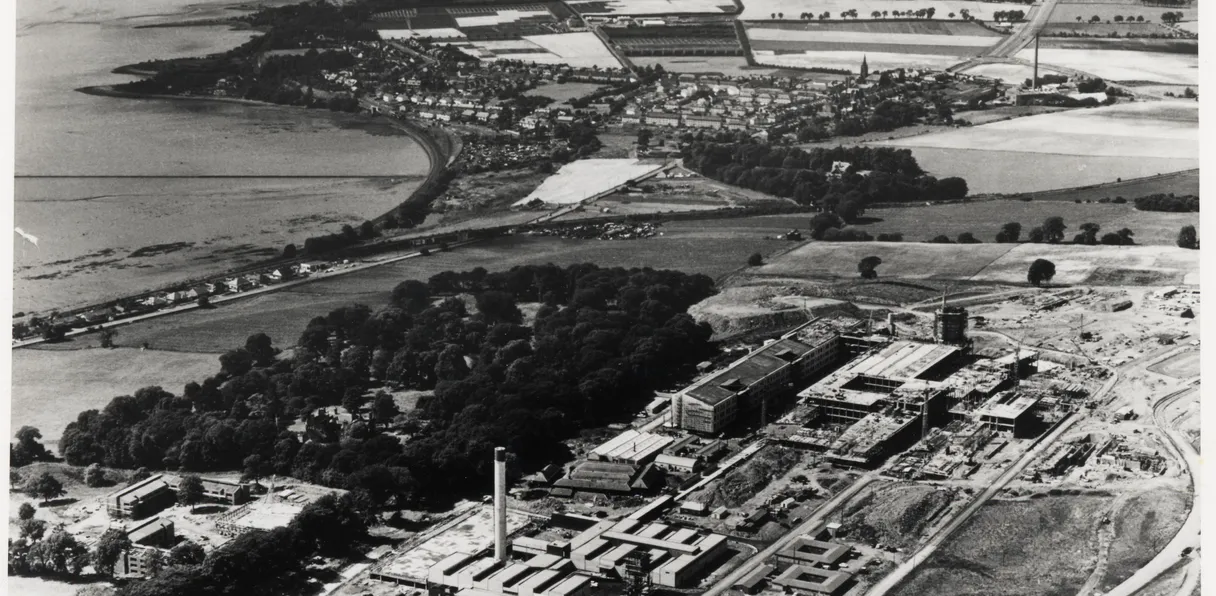
Ninewells Hospital and Medical School
The hospital was officially opened by Queen Elizabeth the Queen Mother on 23 October 1974. At the opening ceremony, she stated "nothing that science can devise, nor money provide, will be lacking for the treatment of the patients".
Dundee’s Medical School was ready to stand on its own, and it did so with confidence and the same sense of purpose that Mary Ann Baxter had for the whole university nearly a century earlier.
History of the Medical School in photos
A lasting legacy
Today, Dundee’s Medical School is world-renowned. We train the next generation of doctors, scientists, and researchers right here in the city. But its story is a proud part of Dundee’s past - one built on vision, resilience, and a whole lot of medical marvels.
That legacy continues today through work including:
- the world’s first remote thrombectomy, carried out from Dundee, using robots to treat patients with strokes cause by large brain vessel blockages
- incision-free therapy for tremor, using focused ultrasound to help people with Parkinson's and essential tremor without traditional surgery
- major advances in understanding Parkinson’s disease, with Dundee scientists identifying a potential drug target that could help develop future treatments
- new treatment for bronchiectasis - 15 years of Dundee research have led to the first ever treatment for this lung disease, significantly improving the quality of life for sufferers