
Antigen Discovery Group
Our research aims to understand how the human immune system senses disease and how this knowledge can be harnessed to develop better diagnostics and therapies.

At the heart of our work is antigen presentation – the process by which cells display fragments of proteins on their surface through the major histocompatibility complex (MHC), enabling constant immune surveillance. We investigate which peptides are presented, how they are recognised by T cells, and how these processes influence immune responses in cancer, infectious diseases and immune-mediated conditions.
We combine advanced mass spectrometry-based immunopeptidomics, proteogenomics, molecular immunology and computational approaches to uncover the diversity of antigens presented by human cells. A particular focus is the dark proteome, including previously overlooked proteins and non-canonical translation products that provide an unexplored source of immune targets.
Our research spans fundamental discoveries in antigen presentation, the identification of novel tumour antigens, and investigations into how HLA diversity shapes immune recognition and responses to therapy.
Ultimately, we aim to move beyond identifying antigens towards understanding and predicting immune recognition, establishing molecular principles that can guide the development of personalised immunotherapies, improve treatment outcomes and reveal new opportunities for clinical intervention.
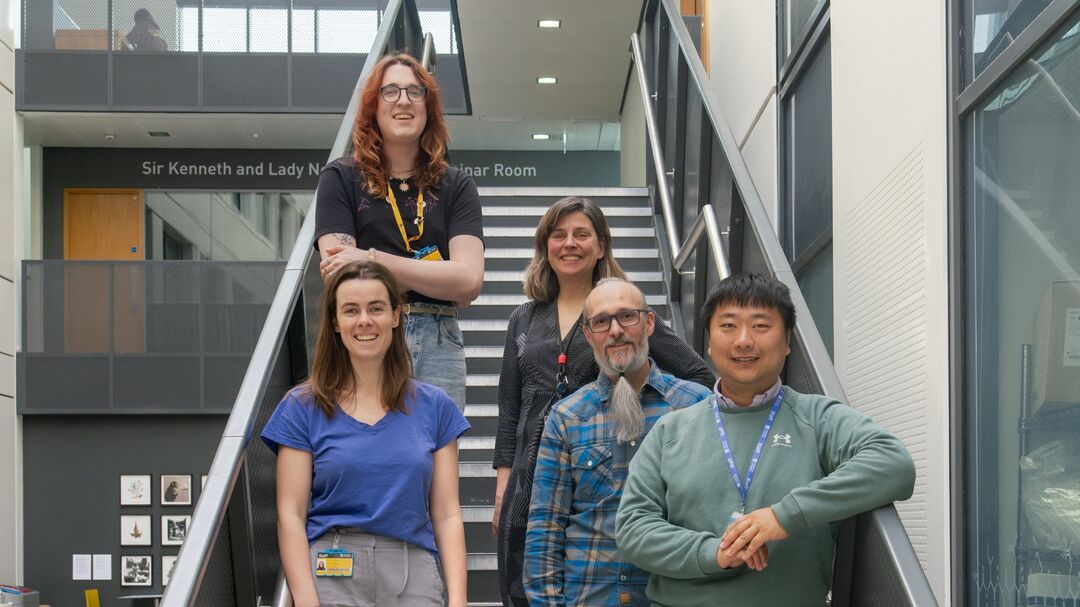
Antigen Discovery Group team in the Life Sciences building