
The Bromiley Case, human factors in the clinical environment
Overview
Project sponsor
- Dr Evridiki Fioratou, Lecturer in Behavioural and Social Science
Medical Artist
- Eve Laws
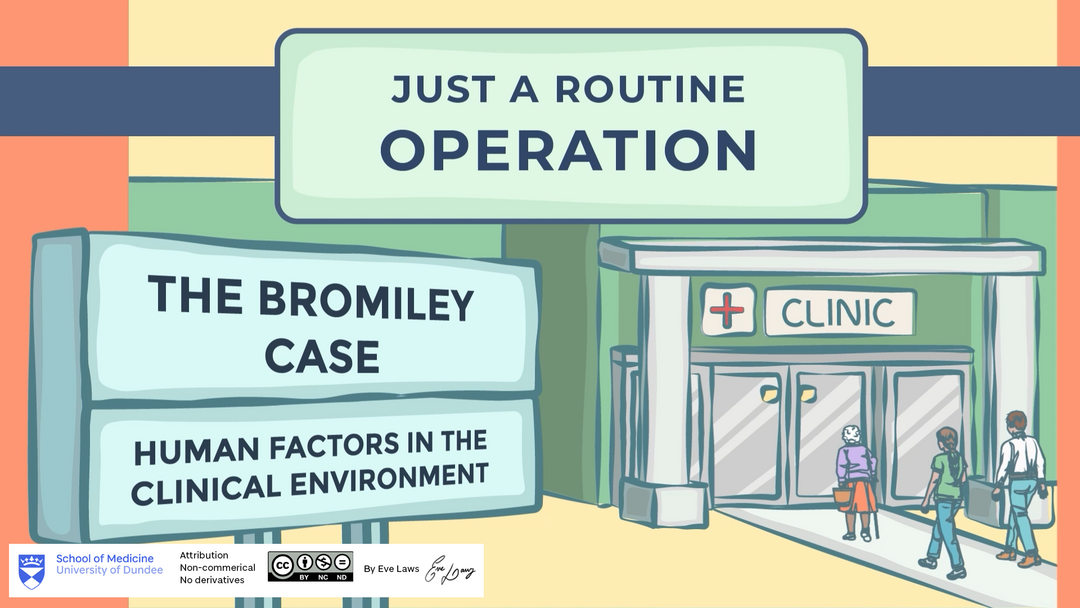
The Bromiley Case is one of the most well-known clinical cases in which human factors lead to the tragic passing of 37-year-old Elaine Bromiley. Martin Bromiley, Elaine’s husband, has attended conferences and held lectures to raise awareness of human factors issues in the clinical environment. His talks focus on the importance of standardisation of procedures, emphasising the need for lessons to be learned without scapegoating individuals. Martin also founded the Clinical Human Factors Group, a charitable trust to raise awareness.
Martin has also been involved in the creation of a video reconstructing the timeline and events of Elaine’s surgery. This is a fantastic educational resource and is widely used in staff and student educational sessions.
Systems Thinking
Dr Evridiki Fioratou teaches students about the importance of systems thinking and understanding healthcare processes, whilst analysing best and worst practice in the clinical environment. The Systems Engineering for Patient Safety Model (SEIPS 2.0)(Carayon and Smith, University of Wisconsin) is frequently referred to and used by Dr Fioratou. Incorporating elements of this model and the importance of human factors into one educational resource would benefit group work in Dr Fioratou’s sessions.
Animation as a Learning Tool
Animation has been shown to engage and stimulate learning in schools and educational institutions. Use of colour and contrast can highlight information and help viewers to retain it, and other aspects of animation can be used to stimulate the senses – visual movements on screen and inclusion of sound, voiceover, as well as concise text. It was decided that a 2D animation with original illustrations would be created to engage student learning. The Bromiley Case events and timeline would be illustrated and described, with an emphasis on the SEIPS 2.0 Work System element included in the closing of the animation, therefore prompting student discussion after viewing. The animation would be trialled with medical students at the University of Dundee and feedback gathered on the success of the method used (2D animation).
Screenshots
The animation was trialled with a group of medical students and overall, the animation was very successful, with 90% of students finding it needed no amendments. The medical artist was responsible for the illustrations, design choices and voiceover.