
News
Medical students explore healthcare differences between UK and Sri Lanka
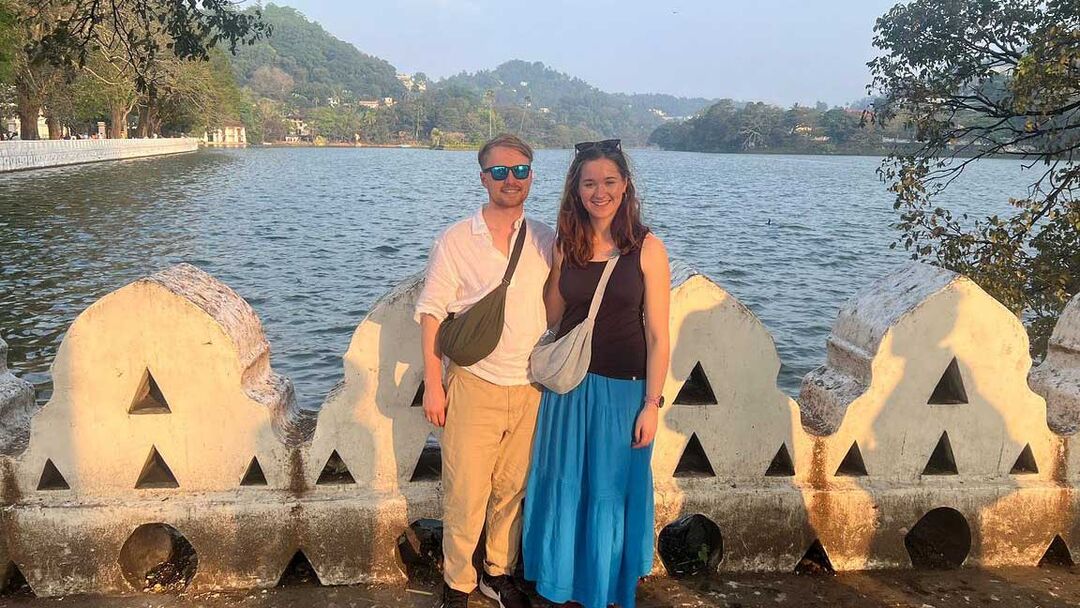
Thomas and Rachel recently travelled to Kandy in Sri Linka during their final year of medical studies at the University of Dundee
Published on 16 July 2025

Here they tell us about their six-week placement, where they explored healthcare in the developing world, including a week in a rural healthcare clinic
Why did you choose to take a placement in Sri Lanka as part of your medical studies?
“We were inspired to undertake an overseas placement to experience how medicine is provided outside of the UK in a different environment with different pressures on staff and services. We were keen to make the most of the time we had allocated for our elective. Travelling overseas was the perfect chance to do this.
“After our first call with the team at Work the World (the organisation that facilitated our placement) to confirm our placement details, we were instantly reassured that we had made the right decision to travel with them. Arriving in Sri Lanka and meeting the incredibly supportive in-country team, we knew that our time there would be well spent.
“We had a video call before our departure, during which we had the chance to select our departments in the hospital. This was really helpful, the team were very knowledgeable and talked us through each department, allowing us to choose the departments we felt would be most beneficial.
What did you experience while on this placement?
“Our placement in Sri Lanka offered excellent learning opportunities regarding tropical diseases that we would not otherwise see in the UK. While this was undoubtedly a highlight, we were also able to develop our knowledge and clinical skills with a wide variety of general surgical and medical cases.
“The placement hospital in Kandy was impressively large, serving a large patient population and offering a wide range of services. It was a busy hospital with very welcoming and friendly staff at all levels.
“Our clinical knowledge was developed through consultant-led teaching during ward rounds and daily organised teaching sessions, depending on the department.
“Registrars and house officers offered excellent bedside teaching on the wards and in theatres. This ranged from physiology to ultrasound for point-of-care tests, to name just a few. Under good supervision, we also practised clinical skills from simple cannulation to the intubation of patients undergoing elective surgery.
“We observed lots of memorable cases across the many departments we had a chance to experience. In the surgical ICU, we observed a patient with 50% surgical burns from a kerosene lamp accident. The patient went on to develop fluid overload and sepsis, requiring complex multi-organ management.
“In the dermatology department, we witnessed a patient with paraneoplastic pemphigus. In general medicine, we observed a patient in the critical phase of dengue on HDU with all the hallmark features of dengue hemorrhagic fever.
“On the ETU, we saw the treatment of a patient who fell from a jackfruit tree due to an epileptic seizure and sustained multiple skull fractures and a hemopneumothorax.
“Further to this, we also witnessed a cardiac arrest with unsuccessful resuscitation, significant tension hemopneumothorax, and hypertensive-associated intracranial haemorrhage.
“The Sri Lankan healthcare system was more similar to the NHS than we had anticipated — both provided universal healthcare. However, there was a noticeable difference regarding resources. The wards were dated, and frequently, the equipment did not function.
“However, the level of care provided was very similar, with the same algorithms and treatment choices being used. The wards, on the other hand, were the busiest we’ve seen, with more pressure on staff. We found that the consultants provided more teaching than we would expect back home, which was great for our learning.
“There were few to no general practices in Sri Lanka, and most Western healthcare was available at smaller rural hospitals or large central ones, such as the one in Kandy.
“Ayurvedic and indigenous medicine were practised throughout urban and especially rural areas, and patients who engaged with these types of medicine were frequently encountered in the national hospital.
“The hierarchical structure in the healthcare settings in Sri Lanka placed consultants in a greater position of authority than in the UK, with a broadly paternalistic approach to patient interactions. However, this varied significantly from individual to individual. Resources, from basic equipment to more complex equipment, such as scanners, were significantly limited in Sri Lanka compared to the UK.
“The Work the World team in Kandy was amazing and helped us make the most of our hospital experience. They introduced us to the consultant on the first day of placement and would regularly drop in to the hospital to ensure we were having a good time.
“When we arrived back at the house, they were eager to hear about our day, including the cases we had observed and the staff we met. They helped us become comfortable with working in a different healthcare system.
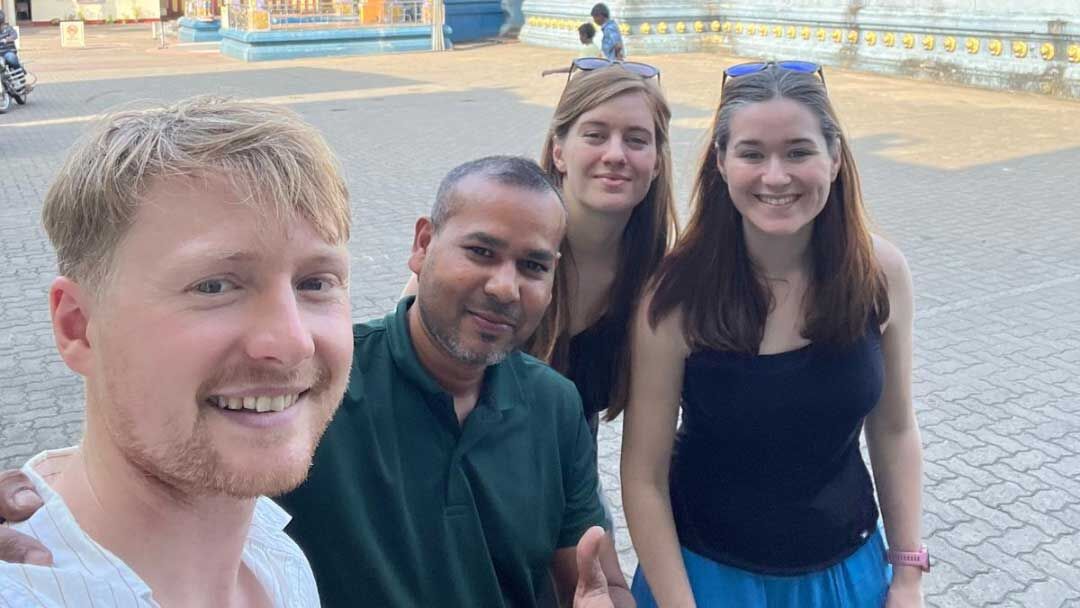
Outside of work, what was it like being in Sri Lanka?
“Kandy was a great place to explore during the week, with markets, cafes, cultural sites, and activities to enjoy with our housemates or on our own. We visited temples, watched Kandyan dancing, spotted wildlife around the lake, and experienced the local nightlife. On weekends, we travelled further afield, visiting sites like Sigiriya and Polonnaruwa, relaxing on stunning beaches, and snorkelling over coral reefs in Trincomalee.
“The friendliness of the Sri Lankan people will stay with us forever. Another thing about our experience that will stay with us forever was seeing elephants in the wild on safari. We felt so welcomed while in Sri Lanka. We’d highly recommend this elective to everyone.
“Our six-week elective in Kandy and the rural village was a once-in-a-lifetime experience. It was an incredible opportunity to learn all about the healthcare system in Sri Lanka, explore the beautiful country, and meet some of the friendliest, genuine, and hardworking people we have ever met.”
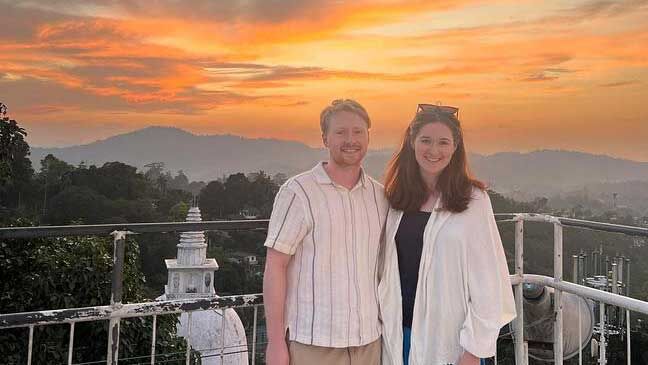
Rachel and Thomas both recently graduated from the ScotGEM MBChB course, a graduate entry medicine course run jointly by the University of St Andrews and the University of Dundee. Find out more about our Medicine courses.
Work the World specialise in creating overseas medical placements across Africa and Asia. Their destinations offer eye-opening insights into the challenges of delivering healthcare in the developing world.