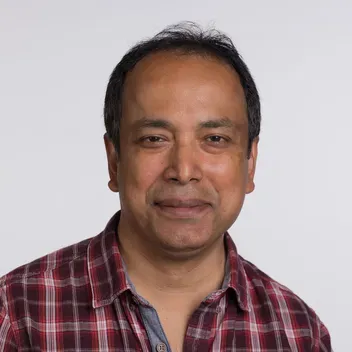
Globalisation (Summer School) module (LD02010)
Module Leader
Dr Abdullah Yusuf
Course Overview
This course examines the concept of ‘globalisation’. What exactly is globalisation? What processes do we associate with it? Is it something to be welcomed or feared? What impact does it have upon states and societies? How does globalisation affect our ability to deal with the major social and political issues of the 21st century?
Course Aims and Objectives
This module aims to introduce students to the concept of ‘globalisation’ and to encourage them to think about how it is relevant to today’s big political issues. This module will encourage students not only to understand the events which are making headline news today; it will also forge a broader appreciation of how these issues have been affected by the forces which are commonly referred to as ‘globalisation’.
Various readings will be designated for each week’s study – these will be assigned at the beginning of the course. Aside from those readings recommended by their tutor, students will also be expected to conduct their own independent research and will be encouraged to source and analyse contemporary media and political analysis of each week’s topic. Students will thus not only develop a solid understanding of today’s major international issues; they will also develop key research skills.
List of Topics
- What is globalisation?
- Debates over globalisation: a force for good or the curse of the poor?
- Empowering the people? Globalisation, politics & revolution: a case study. How events in Egypt (The Egyptian Revolution of 2011 – don’t get confused this with the counter-revolution of July 2013, led by the Egyptian army chief) have been influenced by globalisation.
- A new way of war? Dealing with international terrorism in the post-9/11 era
Course Schedule
Week1. What is globalisation?
Week 2. Debates over globalisation: a force for good or the curse of the poor?
Week 3. Empowering the people? Globalisation, politics & revolution: a case study. How events in Egypt (The Egyptian Revolution of 2011 – don’t get confused this with the counter-revolution of July 2013, led by the Egyptian army chief) have been influenced by globalisation.
Week 4. A new way of war? Dealing with international terrorism in the post-9/11 era
Learning Outcomes
Various readings will be designated for each week’s study – these will be assigned at the beginning of the course. Aside from those readings recommended by their tutor, students will also be expected to conduct their own independent research and will be encouraged to source and analyse contemporary media and political analysis of each week’s topic. Students will thus not only develop a solid understanding of today’s major international issues; they will also develop key research skills.
Assessments
Assessment will be by the completion of week-to-week tasks (first three weeks - 500 words essay) and by a 1000-1200-word essay to be submitted by week 4.
All assignments need to be properly referenced (I don't insist on any one style of referencing, but you must use the same style consistently throughout the essay. You can use either footnotes or Harvard- style system (author, year, date), not the both in the same essay). For more see the "Referencing examples - pretend essay” in My Dundee under "Course Information” folder.
One of the purposes of the weekly-assignment is to familiarise students with the skills necessary to discover and cite relevant source material on their own initiative. Citations from the existing reading from the handbook should be regarded as permissible, but you should bear in mind that to achieve the best possible mark, amongst other things, your lecturer will expect to see evidence that you can go beyond the reading list provided and discover and cite relevant sources yourself.
To upload your weekly essay/work in the Turnitin System, follow the links under the Assignments Section in My Dundee Module site (LD02010 Globalisation (SUM 19/20).
Resources/Materials
Key Readings:
Heywood, Andrew. Global Politics, Palgrave Macmillan, 2014. ProQuest Ebook Central, https://ebookcentral.proquest.com/lib/dundee/detail.action?docID=4763355
John Baylis, Steve Smith & Patricia Owens (eds.), The Globalization of World Politics (8th edition, 2019).
‘Environment & Globalisation: Understanding the Linkages’:
http://faculty.cbu.ca/aburke/pols291/Environment_and_Globalization.pdf
Globalisation. Key facts (The BBC): http://news.bbc.co.uk/1/shared/spl/hi/guides/457000/457022/html/
Poverty in Africa: http://news.bbc.co.uk/1/shared/spl/hi/africa/05/africa_economy/html/poverty.stm
Wale Ghonim (a Google man), speaking about Egypt’s uprising: https://www.ted.com/talks/wael_ghonim_inside_the_egyptian_revolution
Clay Shirky: How social media can make history: https://www.ted.com/talks/clay_shirky_how_social_media_can_make_history?language=en
Kellner D. (2005) Globalization, Terrorism and Democracy: 9/11 and its Aftermath. In: Hayden P., el-Ojeili C. (eds) Confronting Globalization. International Political Economy Series. Palgrave Macmillan, London
Module lead
- Type
- Person