
Plant Power resources
Resources and activities for all to enjoy. It is based on the research undertaken by our plant scientists in the university and at the James Hutton Institute
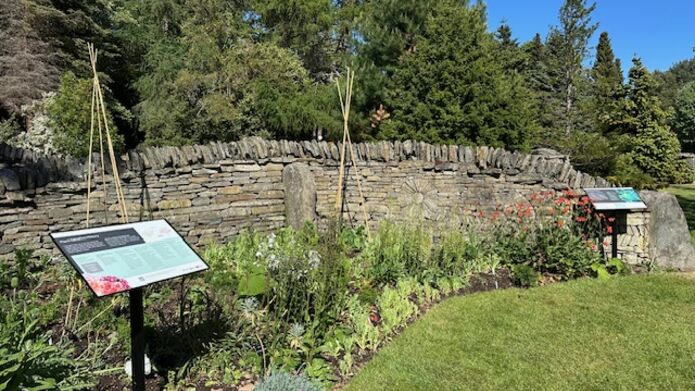
Healthy Plants – How to grow your own crops quiz
Journey through the life of a plant—from seed to harvest—by answering fun, quiz-style questions. The game board features a path of hexagonal tiles representing plant growth stages, with three levels of difficulty: lettuce, tomato, and barley. Use veggie counters and answer questions to help your plant thrive (move forward), stagnate (stay), or suffer (move back).
The game is designed for upper primary aged children.

Plant microbiome to the rescue
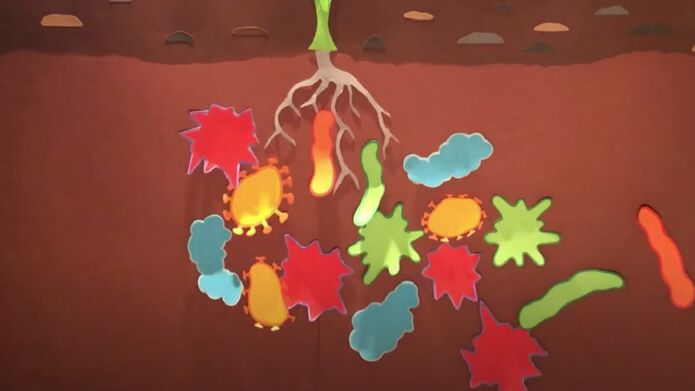
Did you know that 95% of our food is directly or indirectly produced on our soils? And that a single gram of healthy soils contains a million microorganisms, the microbiome, capable of interacting with plants? Join us in this animated science project to unravel the dialogue between plants and microbes in soil and discover how farmers littlest helpers can sustain food security globally. Aimed at all ages.
How can understanding plants and microorganisms help feed the world?
Dr Davide Bulgarelli, a scientist of the University of Dundee, based at the James Hutton Institute in Scotland, is studying the interaction between plants and soil microbes. The findings could boost sustainable food production and help achieve global food security. This resource is aimed at secondary school pupils (12 – 18 years).
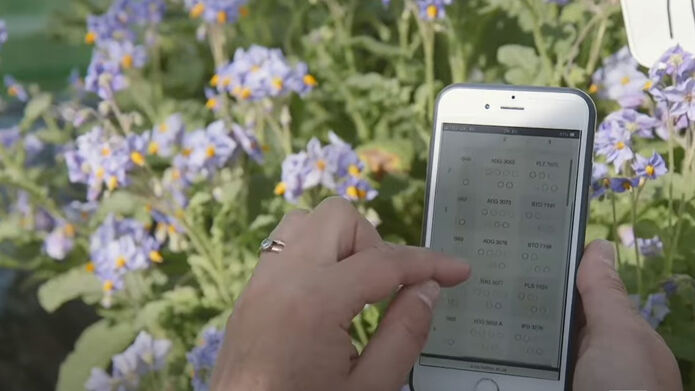
Plant Power 2021

In 2021, our Plant Power event was a self-guided trail with information panels and accompanying activities hosted online. These are the resources created for that event. Topics covered include flighting plant pests and diseases, meiosis and recombination, DNA, Ethiopian Barley Collection, Commonwealth Potato Collection and the Honeyberry.
The WeeCAIR Medicinal Garden activity pack and talk
Created in partnership with the Botanic Garden, the WeeCAIR Medicinal Garden shares the story of where some of our medicines come from. Many that we use today come from the active ingredients found in plants. The Centre for Anti-Infectives Research (CAIR) built a public garden with many of these types of plants. All the plants in the garden have an active ingredient which medicine is made from, or a link to herbalism.
This accompanying activity pack includes information and activities linked to the garden. Aimed at primary age children.
Watch our video about the garden. Aimed at secondary school pupils and adults.